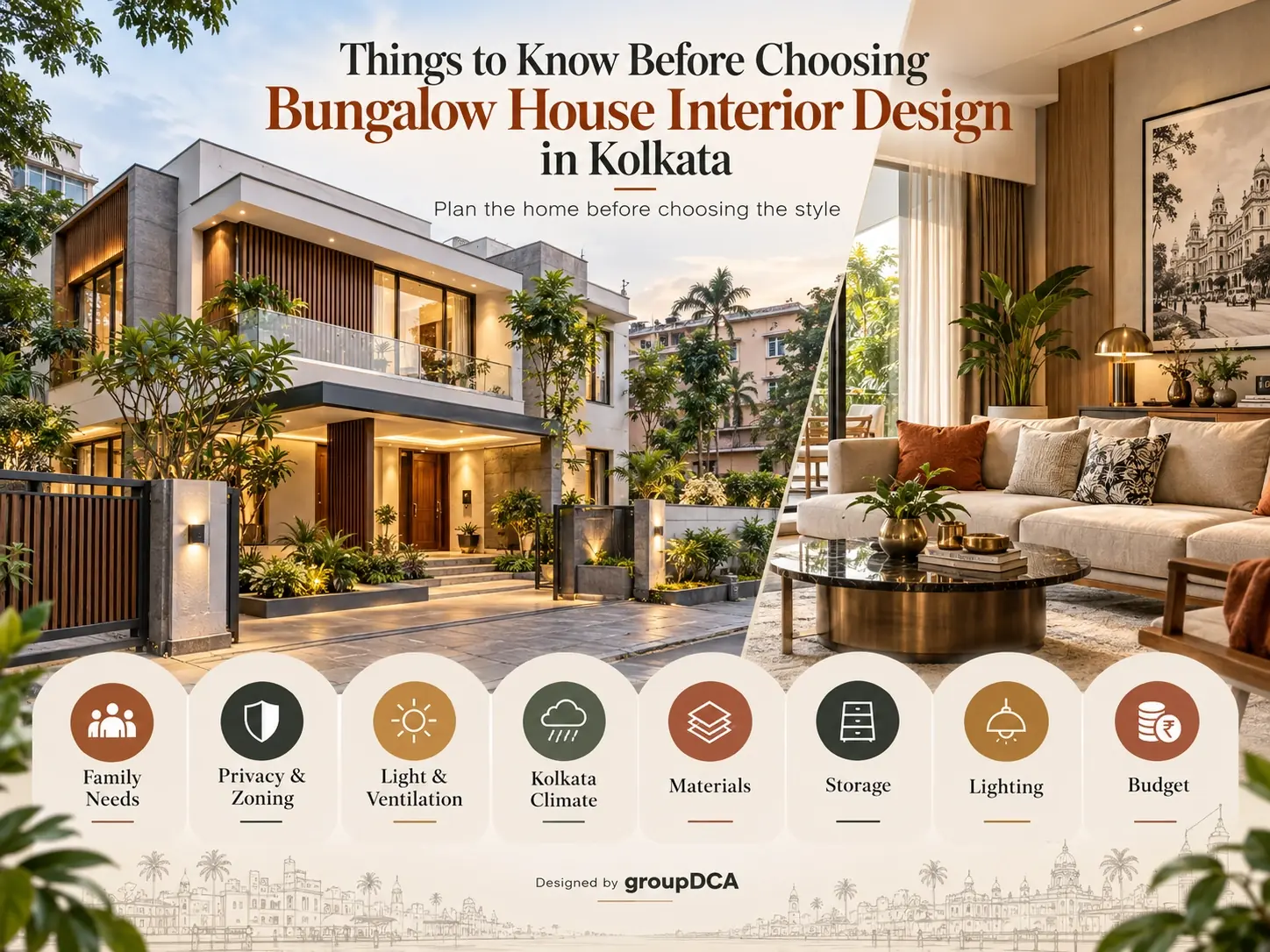
Over nearly three decades, groupDCA, one of the most established architecture firms in Delhi NCR, has built a practice shaped by a simple question before every project: what does this place genuinely need? That question, more than any single building, is what this milestone is really about. As the studio marks 30 years, the milestone is not simply a moment to look back, but an opportunity to reflect on what it has learned along the way and the convictions that have continued to shape its work. This year, the studio introduces #30YearsOfBuildingWhatMatters, a campaign built on the belief that a practice’s real legacy sits in its convictions, not just its portfolio, alongside a new line for the studio, “Dream. Design. Discover. Deliver. The Next 30,” a small addition to the founding philosophy that acknowledges the work is far from finished
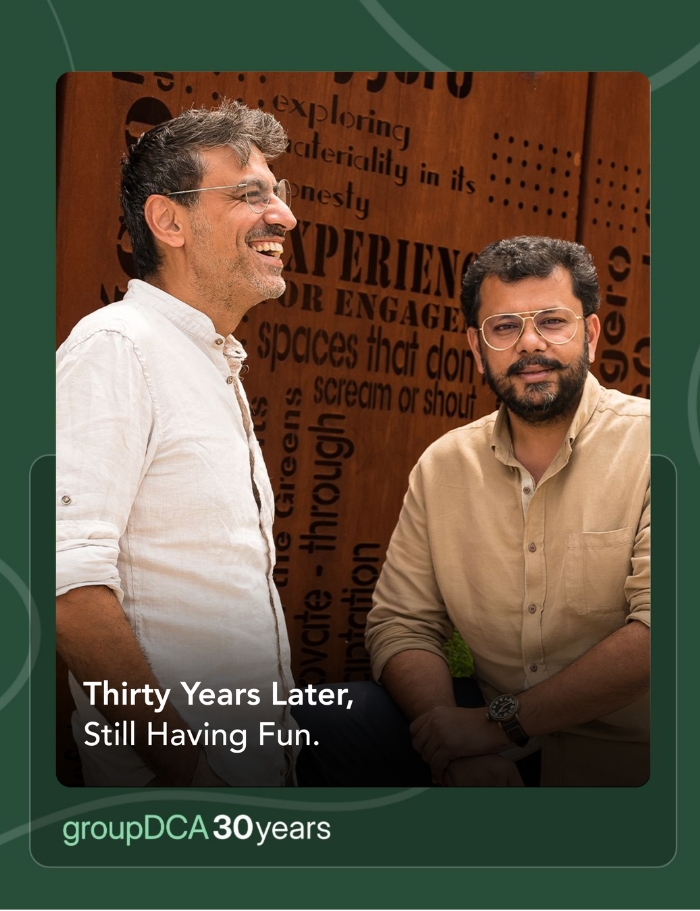
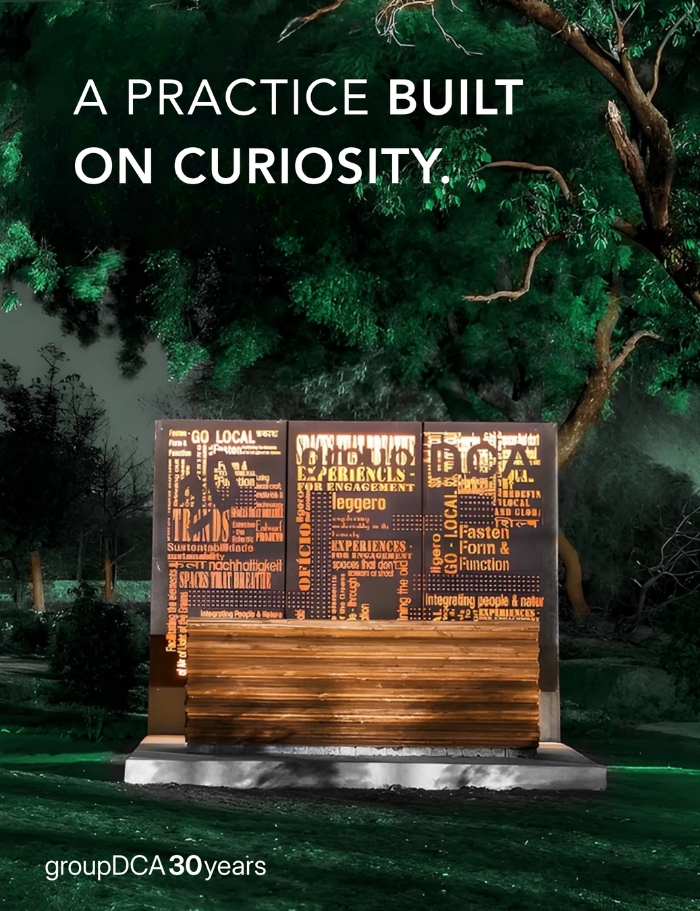
Two Architects, One Studio: The Founders Behind This
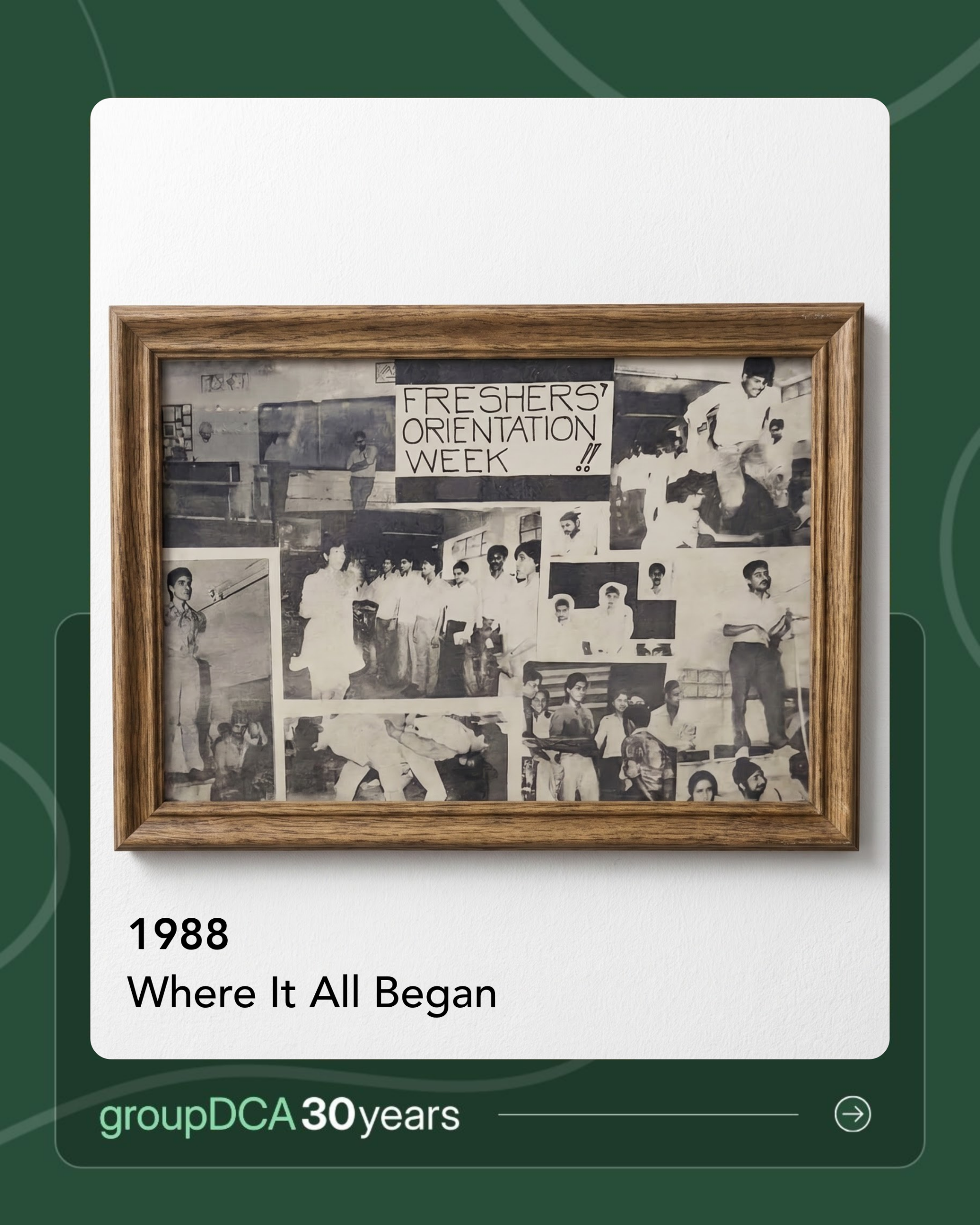
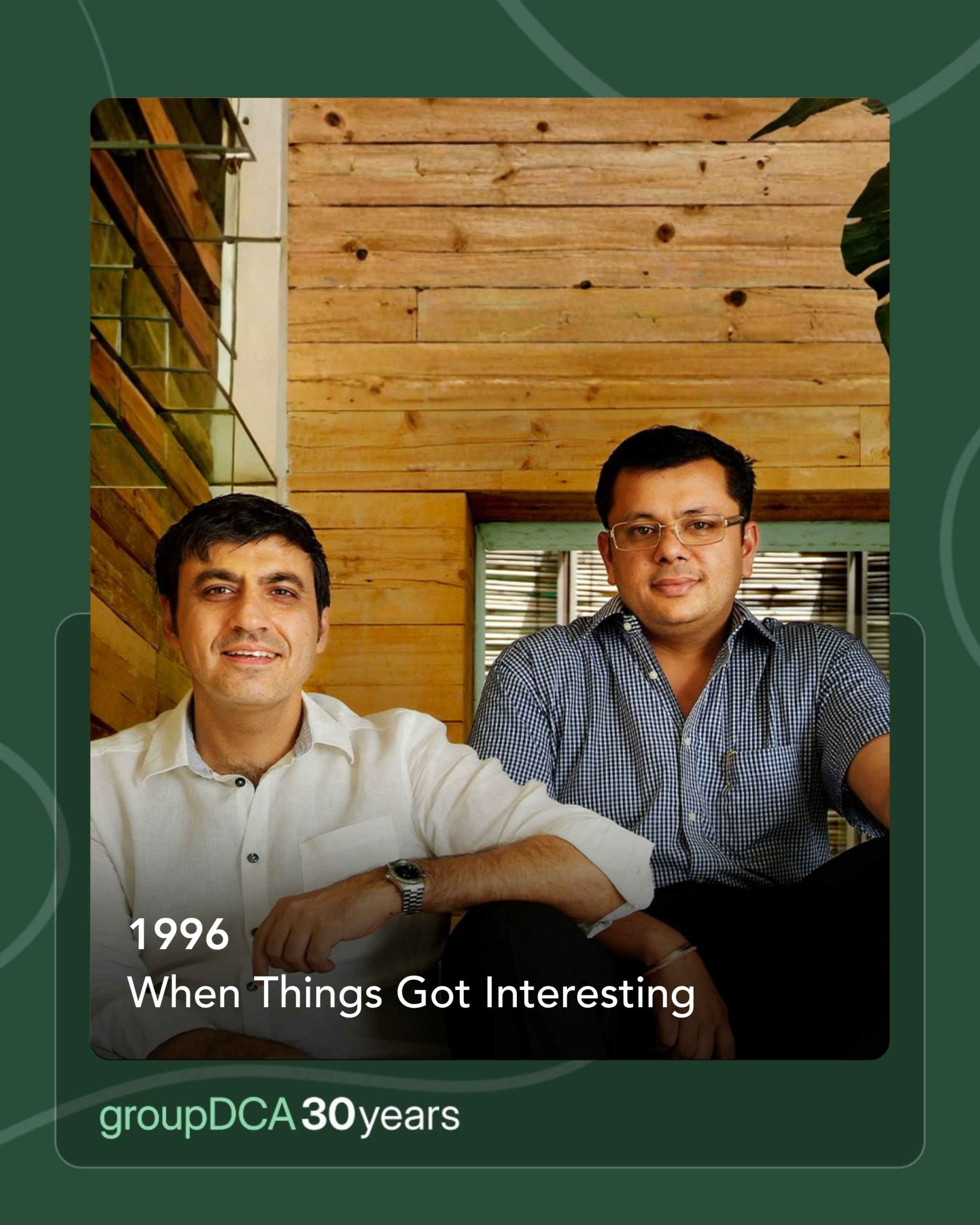
Before groupDCA existed, there was a shared instinct. Amit Aurora and Rahul Bansal met as students at the School of Planning and Architecture, New Delhi, in 1988. They graduated together in 1993, spent three years building different skills in different practices, and reunited in 1996 to found groupDCA. Both architects describe the beginning in almost domestic terms: two drawing boards, a shared conviction about the honesty of architectural practice, and a stubborn belief that spaces should breathe. There was no grand corporate blueprint, only a conviction that would go on to shape one of Delhi’s more considered practices among residential architects and commercial architects over the following three decades. Thirty years later, they describe the studio not as a timeline of completed projects but as an uninterrupted conversation, an ongoing argument with materiality, light, and climate, one where they remain happy to be proven wrong by a better design idea.
The groupDCA Manifesto: Four Truths Behind Every Project
Before it is a portfolio, groupDCA is a practice. What began with two drawing boards in 1996 has grown, over three decades, into a studio working across more than 35 cities and 300 projects, spanning residences, workspaces, retail, hospitality, and wellness environments across the Indian subcontinent, Africa, and the Middle East. A firm’s real signature is rarely a style. For groupDCA, it is a set of convictions that has held steady across every typology and every geography the practice has worked in. The manifesto behind #30YearsOfBuildingWhatMatters distils three decades of practice into four core truths.
Context: Designing for the Coordinates
Every site carries its own climate, culture, and memory before an architect ever arrives. As a practice known for contextual design and climate responsive architecture, groupDCA begins each project by listening to the site rather than imposing a predetermined idea onto it.
A home in Gurugram, a jewellery flagship in Ahmedabad, and an office in Kolkata are not interchangeable problems solved by the same formula. Context over convention has remained one of the more consistent instincts behind the studio’s work as both residential architects and commercial architects.
Honesty in Materials
Where much of the industry treats material as a proxy for luxury, groupDCA treats material honesty as a form of respect, both for the material and for the people who will live with it. Wood, stone, brass, and locally sourced materials are chosen for how they age rather than how they photograph on day one. This is the same conviction that shapes the studio’s approach as a sustainable architecture and interior design company: materials should be allowed to reveal their character over time instead of being concealed under embellishment.
Longevity: Built for the Generation After Next
A building’s first year rarely tells you whether the design worked. groupDCA’s commitment to longevity in architecture asks a longer question: will this space still make sense to the people using it twenty years from now? Restrained luxury, adaptive reuse, and design decisions that favour durability over novelty all trace back to this single truth, one that has guided the studio’s projects as an architecture firm in Delhi NCR from its earliest commissions to its most recent ones.
Simplicity in Design: The Discipline of Restraint
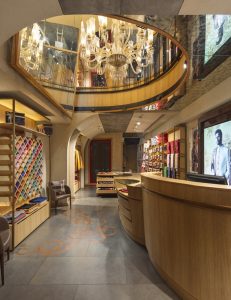
Simplicity, at groupDCA, has never meant doing less. It means including only what a space genuinely needs and having the discipline to leave the rest alone. This principle of restraint in design runs through the studio’s work as residential architects and commercial architects alike, from a compact bookstore in Kolkata to a 40,000 square foot retail flagship in Hyderabad. Craftsmanship, in this context, is not decoration. It is the quiet, considered work that most people will never consciously notice.
One Practice, Many Typologies
The four truths do not change from one project type to the next; they simply take a different shape. A house begins as a question of shelter and becomes something more personal: a home shaped around how a family actually lives, not how a floor plan reads on paper. As residential architects, the studio treats every home as an ongoing conversation between site, client, and the people who will grow into the space over time. Workspace design starts from the same thought, applied differently: understanding how people actually work, not how an office should photograph. As commercial architects, groupDCA designs environments where daylight, movement, and material choices support focus as much as collaboration, letting function shape form rather than the other way around.
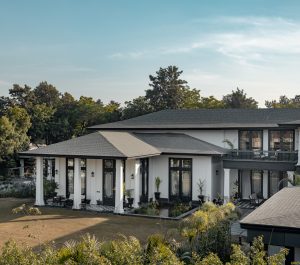

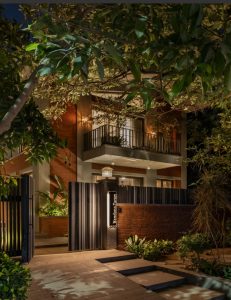
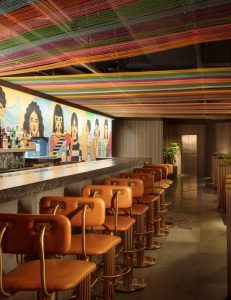
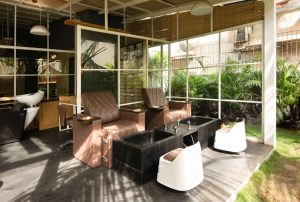
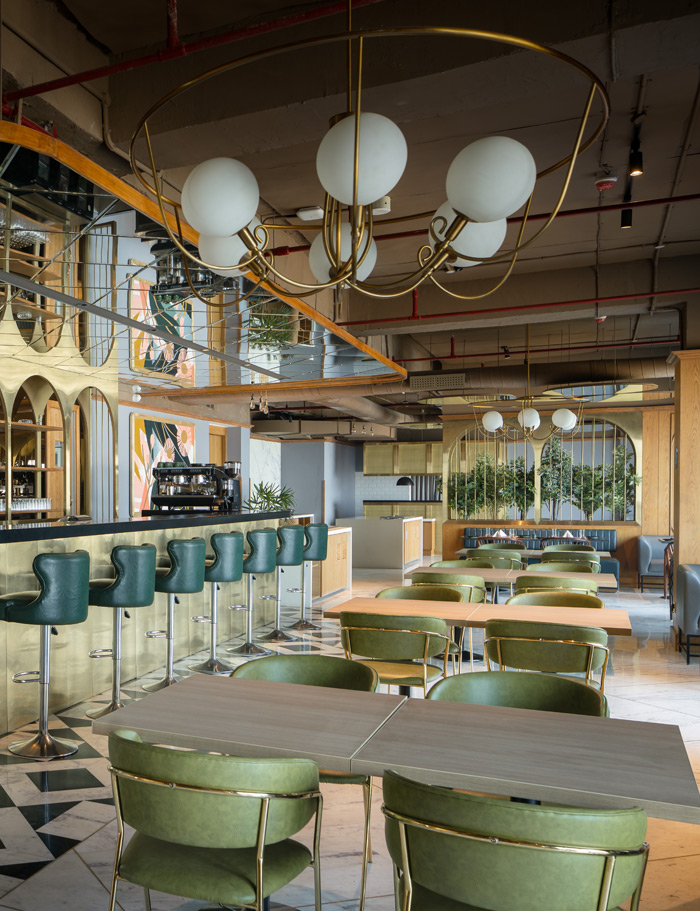
Retail design moves beyond display. Storefronts, jewellery flagships, and lifestyle destinations are planned as sequences that invite people to explore a brand, rather than simply present it, using materiality and spatial rhythm to turn a store into an experience rather than a shelf for products. In hospitality design, that same thinking is pushed further: spaces are shaped to hold a memory, not just a stay, with materiality, light, and detail creating experiences guests carry with them long after they leave. Wellness projects ask a different question of architecture altogether: how does a space help someone slow down or simply breathe, and the same restraint and material honesty runs through wellness design as through the rest of the practice, whether the brief is a home, a workplace, a store, a hotel, or a space built purely for recovery.