In rapidly urbanising Indian cities, residential architecture is often driven by efficiency, density, and visual impact. However, homes are not isolated objects. They are deeply shaped by the environments and social structures that surround them. Climate-responsive design and cultural context in architecture play a decisive role in determining how people inhabit space, how buildings age, and how comfortable they remain over time. Hence, design must return to the idea of contextual living and consider residences as responsive systems rather than static structures.
In a country as climatically and culturally diverse as India, this conversation has particular urgency. Rising temperatures, dense urban growth, and evolving family patterns are pushing residential design to reconsider long-standing assumptions. Instead of treating comfort as something achieved solely through mechanical systems, design must prioritise passive design strategies such as building orientation, cross-ventilation, and semi-open spaces. Similarly, cultural expectations about how families gather, celebrate, or maintain privacy also play an important role in shaping spatial planning.
Designing With Climate and Place
Climate has always been one of the most powerful forces shaping architecture. Orientation, ventilation, and the placement of openings influence not only comfort but also a building’s long-term performance. Homes that harness natural light, cross-ventilation, and shaded outdoor spaces reduce dependence on mechanical systems while creating healthier living environments.
Equally significant is the relationship between architecture and landscape. Whether overlooking a river, responding to a corner plot in a dense neighbourhood, or engaging with surrounding greenery, contextual design ensures that the built form complements its setting. This approach also encourages restraint. Instead of imposing dramatic gestures, design can focus on clarity in layout, thoughtful circulation, and spatial hierarchies that support daily life.
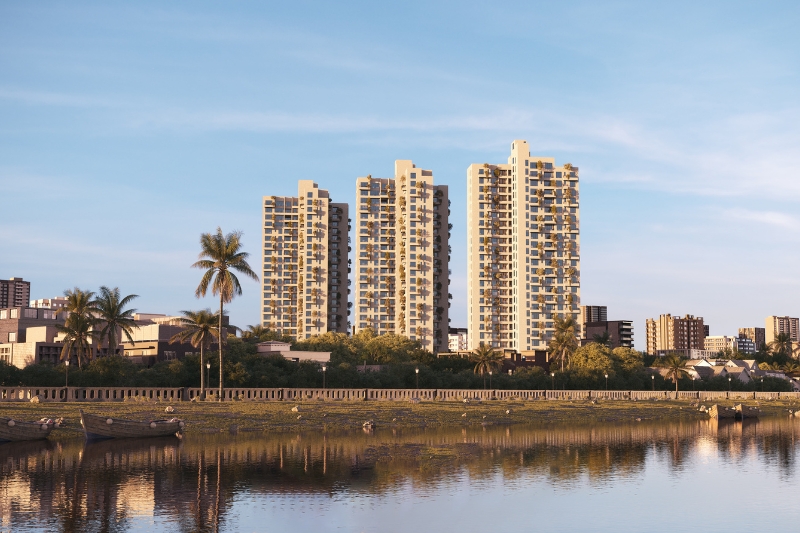
The design for Primarc Aadvika, a riverfront housing project set along the Hooghly River in Kolkata, demonstrates how urban housing design can respond to climate and landscape. Built on the site of a former jute mill, the development reimagines an industrial landscape as a climate-responsive residential environment. The planning strategy begins with the river itself—the breeze, expansive views, and shifting light conditions. The three residential towers are positioned to maximise cross-ventilation and visual connections with the water. Semi-open terraces and dual-sided openings keep apartments naturally ventilated, while a landscaped perimeter buffer enhances airflow and daylight penetration across the site.

Culture and Patterns of Living
While climate shapes a home’s environmental performance, culture shapes how it is experienced. In many Indian households, residential design must balance privacy with shared living. Multi-generational living, social gatherings, and everyday rituals influence how spaces are organised.
Spatial organisation becomes a tool for maintaining this balance. Separate entrances, flexible gathering areas, and layered circulation patterns allow homes to accommodate multiple households while preserving a sense of unity. Here, design becomes a mediator between traditional and contemporary residential design.
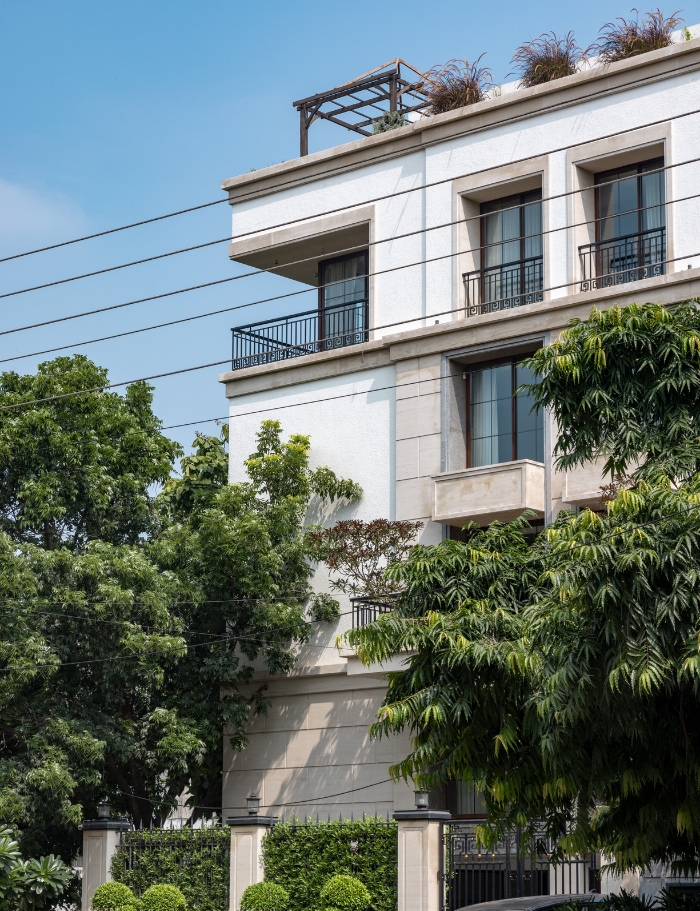
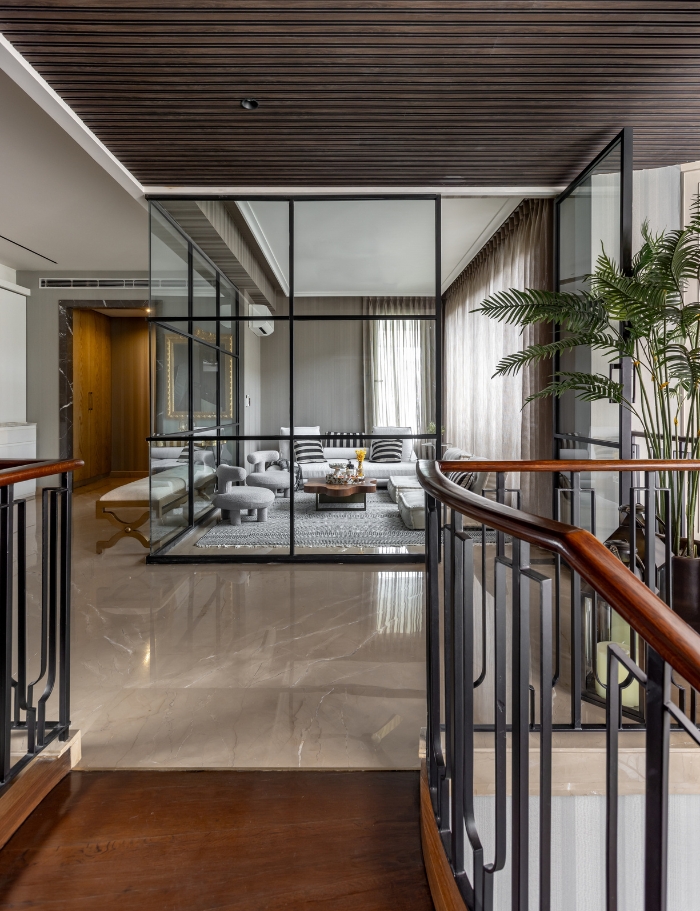
The design of the House of Two Worlds in Gurugram by groupDCA reflects how cultural patterns can shape contemporary residential planning. Situated on a corner plot with dual visibility, the residence is designed to accommodate the spatial needs of two families. The layout interprets the traditional joint-family system through a contemporary lens: two duplex homes operate independently while remaining interconnected. Separate entrances maintain privacy, while internal staircases and shared spaces encourage interaction. Neoclassical design cues are integrated subtly, reinforcing a sense of timelessness while accommodating modern living patterns. The planning also considers orientation and natural light, particularly through large corner openings that draw soft daylight into common spaces.

Towards a More Responsive Future
Contextual living reminds us that residential architecture can rarely emerge from a universal formula. Climate, geography, and culture shape how homes perform and how people experience them daily. When these factors guide design decisions from the scale of the site to the organisation of interiors, homes become more resilient, comfortable, and meaningful living environments.