Luxury retail today is no longer defined by the act of purchase alone. As consumer expectations evolve, retail stores are required to do more than display products. They must communicate brand identity, build trust, and offer an in-store experience that cannot be replicated online.
The idea of what it means to ‘experience’ luxury is no longer tethered to spectacle or excess. Instead, a new spatial language is emerging where every gesture, material, and detail mediates between heritage and innovation, intimacy and immersion, product and place. This shift is not about novelty alone, but about rethinking how display design and user interaction can work together to create more meaningful engagements in contemporary retail environments.
Beyond display: designing for experience
Traditional luxury retail often relied on templatised design such as glass vitrines and fixed circulation paths. While this model prioritised efficiency and security, it also created a certain distance between the user and the product. For Mirwah Jewels, Ahmedabad, the store was designed to unfold as a sequence of curated rooms rather than a continuous floor. Movement is guided through transitions defined by material palettes, lighting strategies and arched thresholds while textured surfaces and varied types of display slow the pace of browsing. The layout introduces multiple pause points, instead of prioritising efficiency alone. This measured progression allows visitors to engage more closely with the objects, positioning the product within a larger experiential framework.
Highlighting context and craft
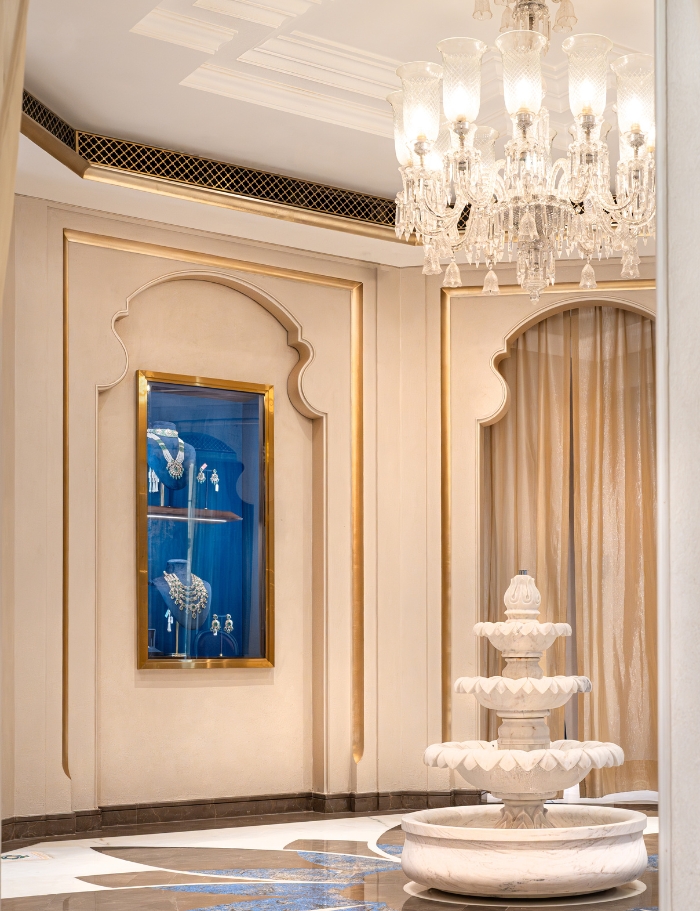
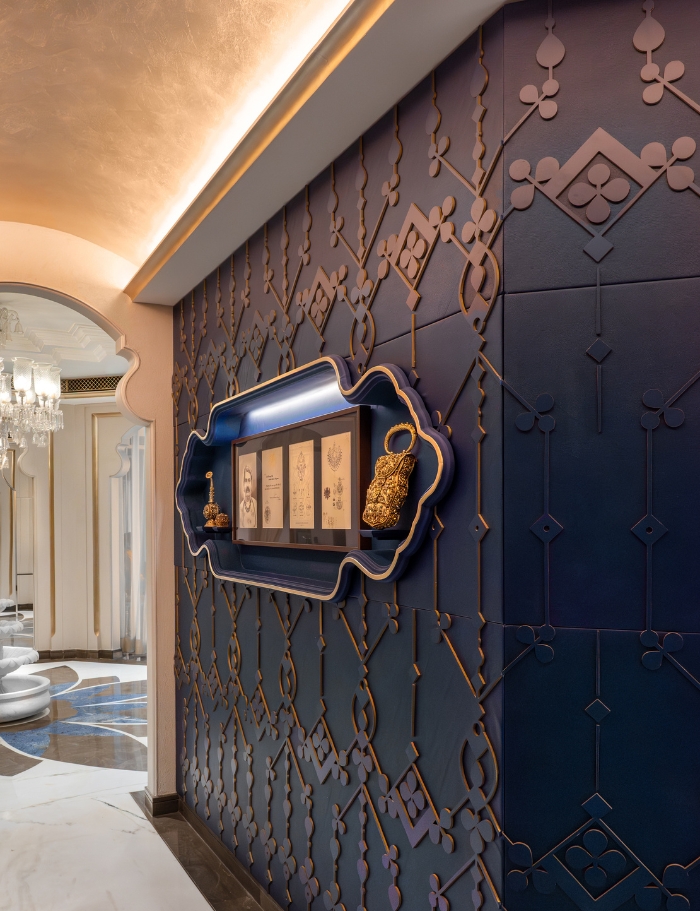
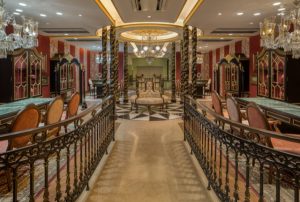
As retail environments become more experience-driven, interaction itself is being redefined. It is being shaped by movement and conversations rather than a series of display counters. This was the primary intent for the design of Raniwala 1881 flagship in New Delhi, where the store is conceived less as a showroom and more as a brand narrative. Drawing from the architecture of a traditional haveli, the layout is organised around a central courtyard, with rooms unfolding through a series of arched passages. The absence of rigid counters allows visitors to move freely, engaging with jewellery in a setting that feels closer to a residence than a conventional store.
Handcrafted materials, marble inlay, and layered textures create a tactile environment where craftsmanship is not only displayed but experienced. Installations that narrate the brand’s legacy enhance this experience further, positioning the store as both a retail space and a repository of cultural memory.
Moving from display to belonging
At a larger scale, luxury retail environments are expanding beyond the store itself, increasingly overlapping with hospitality design, leisure, and legacy. This shift transforms retail into a more comprehensive experience.
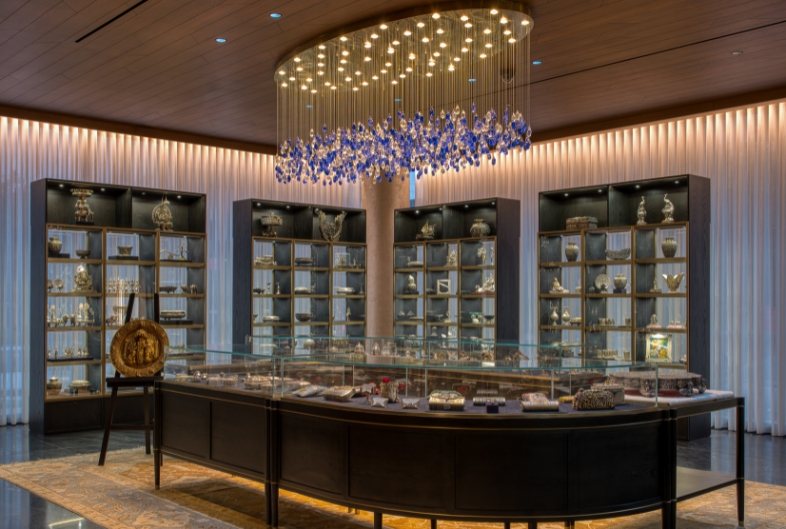
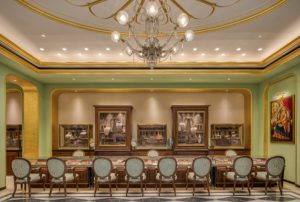
At Khurana Jewellery House in Ludhiana, the layout introduces multiple pause points within the retail journey. Central seating, symmetrical vitrines, and a consistent spatial rhythm encourage visitors to sit, observe, and engage. The inclusion of lounges and learning-spaces within the programme shifts the focus from transaction to lifestyle-driven experiences. The design balances visibility with intimacy, making the interaction more personal and unhurried.
A new framework for luxury retail
Redefining luxury retail design today requires reframing display as participatory, experience as immersive, and interaction as both personal and cultural. It calls for a more deliberate alignment of spatial planning, material choices, and user experience design. At groupDCA, we believe the future of retail lies in environments that are as much about narrative and belonging as they are about objects, where layered design choices invite visitors to slow down, engage and takeaway more than the product.