As Indian cities grow denser and homes contract into ever-smaller footprints, the balcony has come to hold unexpected importance. It is the rare fragment of openness in a verticalised landscape. At this threshold, a resident can lean into daylight, breathe unconditioned air, or look out onto the pulse of the street below. In compact apartments, it has become the most dynamic square metre, shifting roles throughout the day as a garden, workspace, dining corner, or simply a place of pause. In this adaptability, the balcony speaks of how urban homes continue to evolve, creating moments of relief and connection in the midst of constrained living.
This shift is changing how architects approach residential design. Balconies are no longer treated as narrow ledges tagged onto facades, whether in buildings or in independent houses, but as vital extensions of the home. They frame everyday rituals, such as morning tea, evening conversations, and provide the openness that compact living often denies. At groupDCA, we see the balcony as a stage that shapes the lived experience of the home as much as its interiors do.
In fact, the real estate market has sharpened this conversation. For many homebuyers, a balcony is not a decorative extra but a decisive factor in choosing an apartment. Developers highlight balconies in marketing because they add perceived—and real—value, offering a sense of openness that compact floorplans lack. A well-designed balcony can lift property desirability, acting as a differentiator in dense housing markets. In this way, the balcony sits at the intersection of architecture and aspiration, shaping both lifestyle and investment.
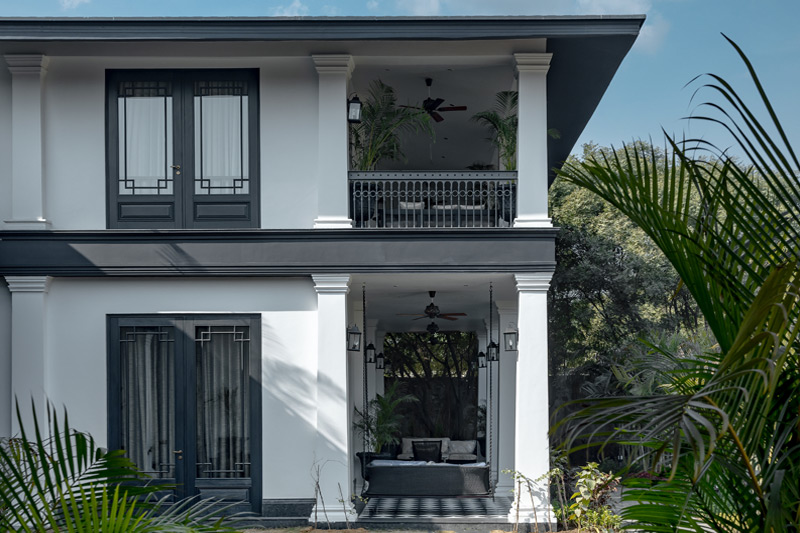
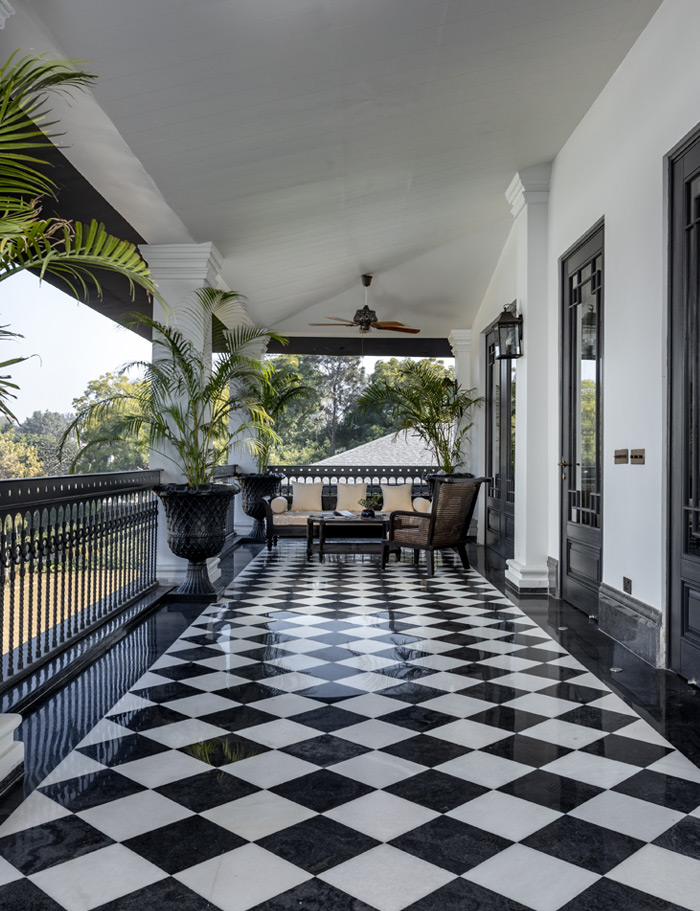
In the House of Verandahs, this idea takes form in layered balconies that reinterpret the traditional Indian verandah. Lined with greenery and carved deep into the building’s edge, these spaces act as transitional lounges, shaded, intimate, and yet connected to the outside. They mediate between home and outdoors, giving residents a porous threshold.
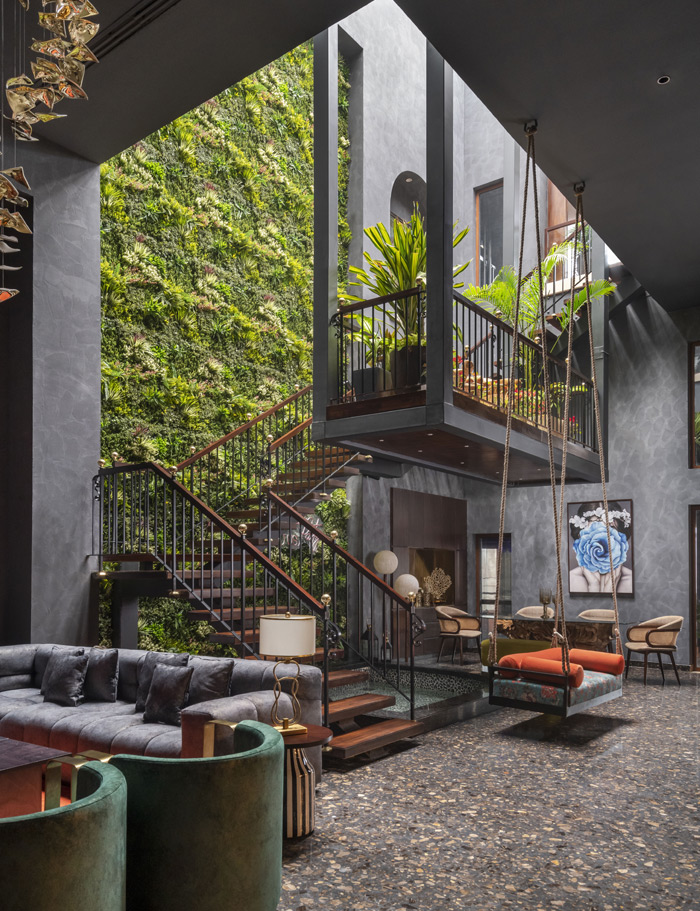
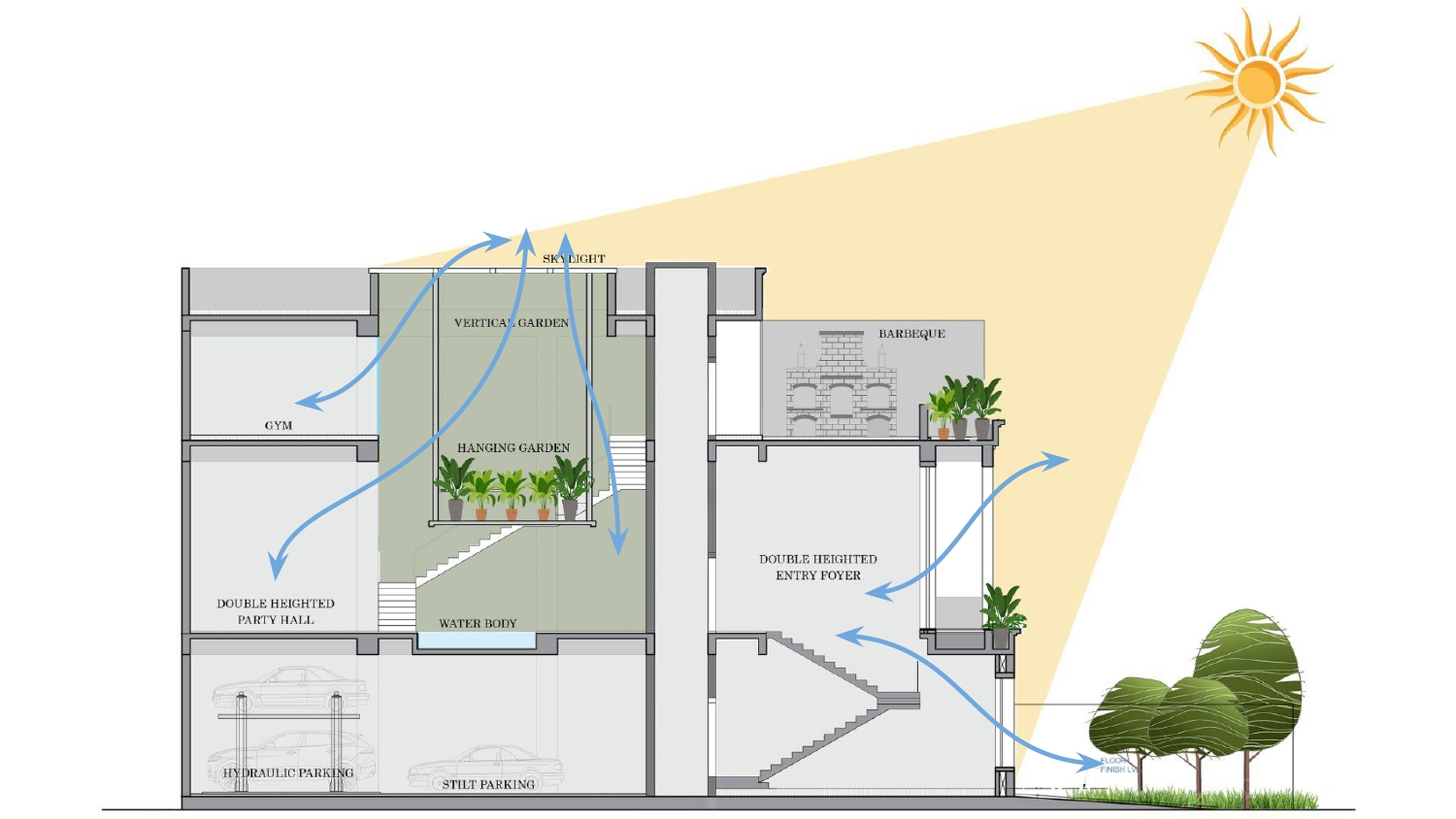
In another residential project, Utopia, the idea of the balcony turns inwards. Instead of projecting outward from the facade, a vertical cut-out carved through the building volume creates an internal courtyard. This reimagined balcony draws light and air into the home’s centre, functioning as a sheltered breathing space while maintaining privacy in a dense urban context. It illustrates how the balcony can be reinterpreted as a spatial void that structures the life of the home from within.
These projects reveal just how fluid the balcony has become in contemporary living. It can be a small domestic garden, an improvised office, a children’s play corner, or a wellness deck for yoga and meditation. It can face the city or fold inward, encourage sociability or offer retreat. Its actual value lies in the way it adapts, expanding the possibilities of the home without demanding more built area. In an age where well-being, sustainability, and connection with nature are shaping the conversation around housing, the balcony plays a crucial role. The balcony, in all its interpretations, continues to remind us that the smallest spaces often carry the most significant impact.