In many contemporary buildings, especially across commercial and hospitality typologies, the architectural shell often arrives as a neutral container—efficient, repeatable, and largely devoid of spatial character. It is within these frameworks that sculptural interior design becomes a critical design tool. Rather than treating interiors as a surface-level exercise, it allows design to engage with volume, structure, and sequence, transforming otherwise generic spaces into environments with identity and depth.
Beyond stylistic additions, sculptural interventions act as instruments through which function, emotion, and spatial clarity are negotiated together. Their relevance today lies in the increasing need for spaces that offer meaning and an enduring sense of place.
Form, function and contextual relevance
Sculptural interior design begins with the shaping of space itself, where ceilings, walls, and floors work together as a cohesive, meaningful system. A common misconception is that sculptural interiors rely on visual drama. In practice, their effectiveness lies in restraint and intent.
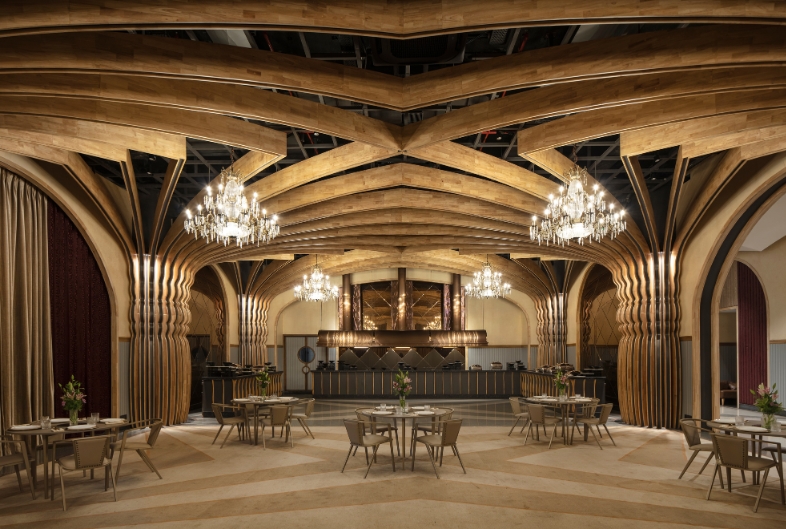
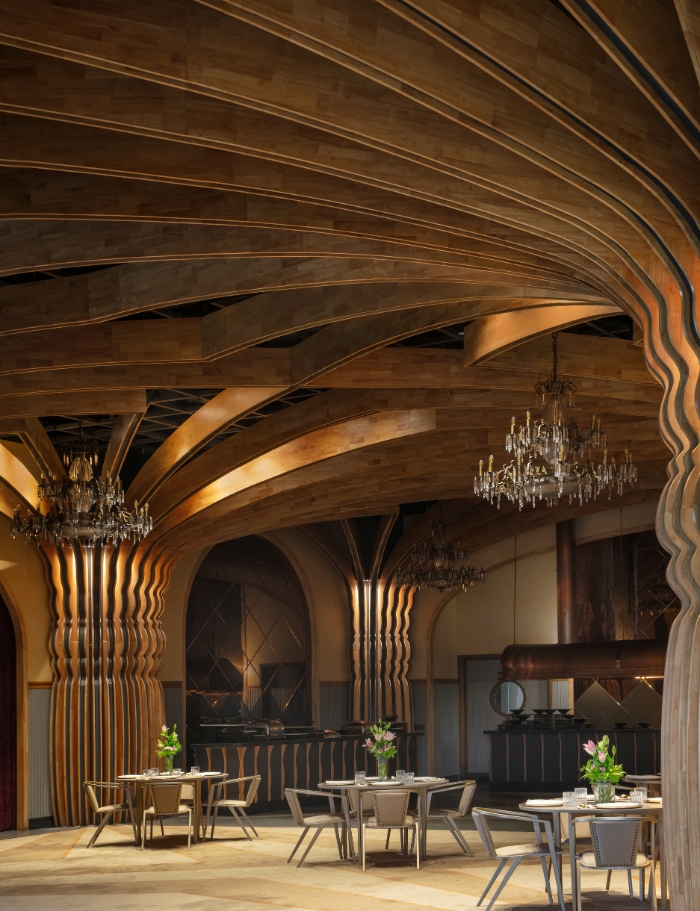
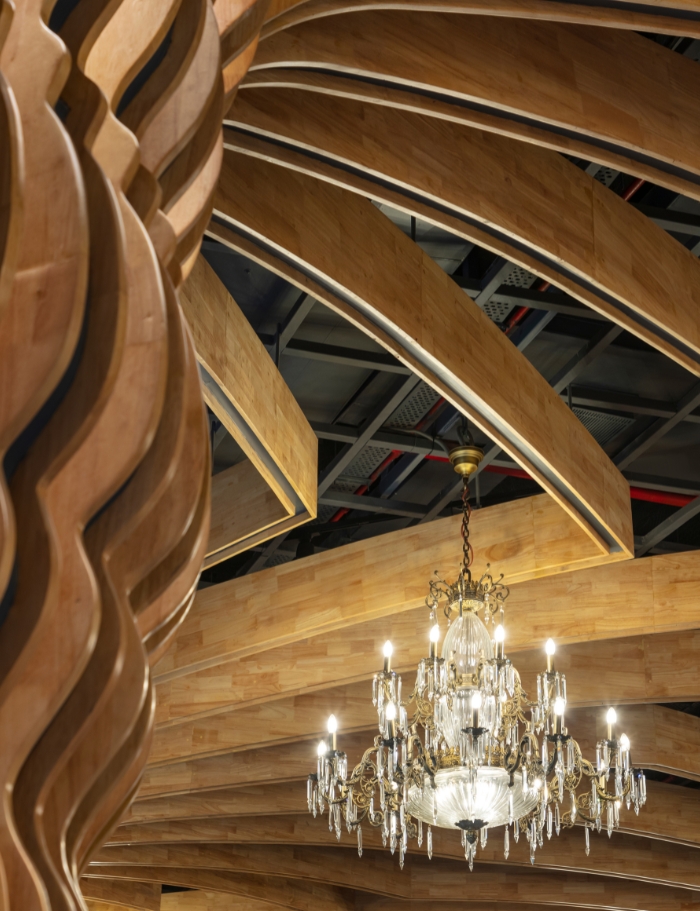
Intersecting vaults and intricately profiled columns were used at the Nishtara Banquet Hall, Kolkata, to evoke the city’s cultural identity. Merging its European and temple architecture roots, the design imbues the space with rhythm and memory. The vaults simultaneously accommodate a concealed grid for lighting and event infrastructure, allowing the space to remain adaptable without compromising its architectural clarity. The geometry of the terrazzo floors below creates dialogue with the vaults above, making the user’s journey both intuitive and ceremonial—staying true to its functional essence.
While form establishes order, materiality and lighting design shape how a space is perceived and felt. In sculptural interiors, this relationship is defined by clarity and restraint.
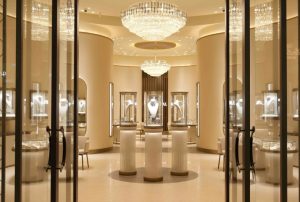
At Hazoorilal Legacy in Dubai, curved ceilings, sculpted niches, and floating vitrines guide movement with subtlety. A monochromatic palette of warm whites, marble, and bronze accents allows light to diffuse gently across surfaces, creating an environment that feels calm yet refined. The absence of overt ornamentation allows the architecture to recede, placing emphasis on spatial and emotional experience.
At the Nishtara Banquet Hall in Kolkata, bespoke chandeliers inspired by the Bengal School of Art act as focal points, while contributing to ambient lighting and spatial hierarchy. The interplay of crafted elements and controlled function ensures that grandeur emerges from careful composition rather than superficial additions.
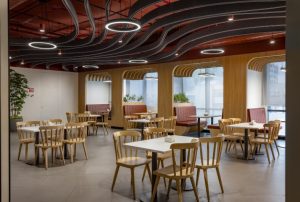
Sculptural interiors can offer that environment where aesthetics don’t compromise on operational ease and function is inseparable from emotion. These are the spaces where cultural references, technical ingenuity, and the sense of belonging converge to create layered experiences.