In fast-growing Indian cities, ageing homes are often seen as liabilities. The default response is demolition followed by a complete rebuild. Yet as conversations around sustainable home design, resource-efficient architecture, and long-term value gain urgency, restoration is emerging as a considered alternative. Instead of viewing existing structures as obsolete, it asks how they can be adapted to support contemporary lifestyles. In doing so, residential restoration projects offer more than environmental prudence; it reinforces continuity, character, and a sense of rootedness that new construction often struggles to replicate.
Re-examining Value
For designers and homeowners alike, the question is shifting from “what can we build?” to “what should we retain?” In a context shaped by environmental pressures, material limitations, and a growing desire for meaningful spaces, adaptive reuse becomes a practical and cultural lens that balances memory with reinvention. A key lesson it offers is clarity in spatial planning. Working within an existing shell limits the impulse for excessive expansion or dramatic structural intervention. The focus instead turns to refining what is already present.
Older homes often reveal inefficiencies such as awkward movement patterns or underutilised corners. Through selective demolition and careful reconfiguration, these shortcomings can be addressed without disturbing the structural framework. Restoration also uncovers opportunities within overlooked spaces. Basements, terraces, and transitional zones can be reworked to introduce daylight, ventilation, and renewed purpose, thereby strengthening the home’s overall functionality.
Upgrading Performance Without Erasing Character
Spatial refinement alone is not enough. Contemporary living demands improved comfort, efficient systems, and long-term energy performance. The real test lies in an energy-efficient home upgrade without stripping the house of its memory and identity.
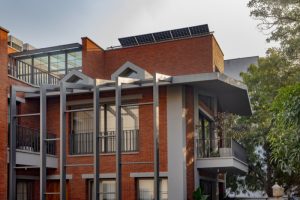
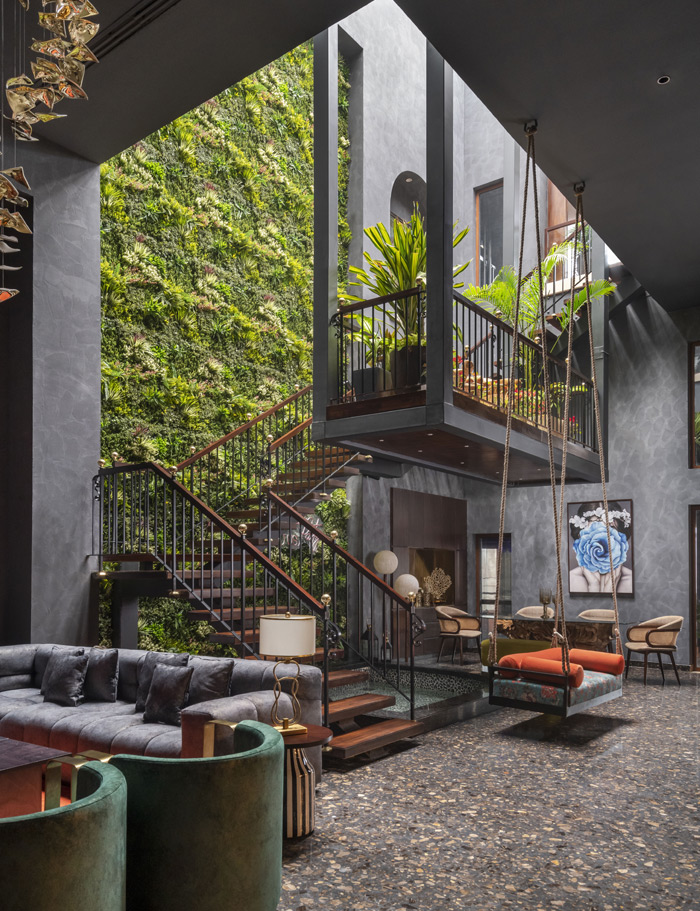
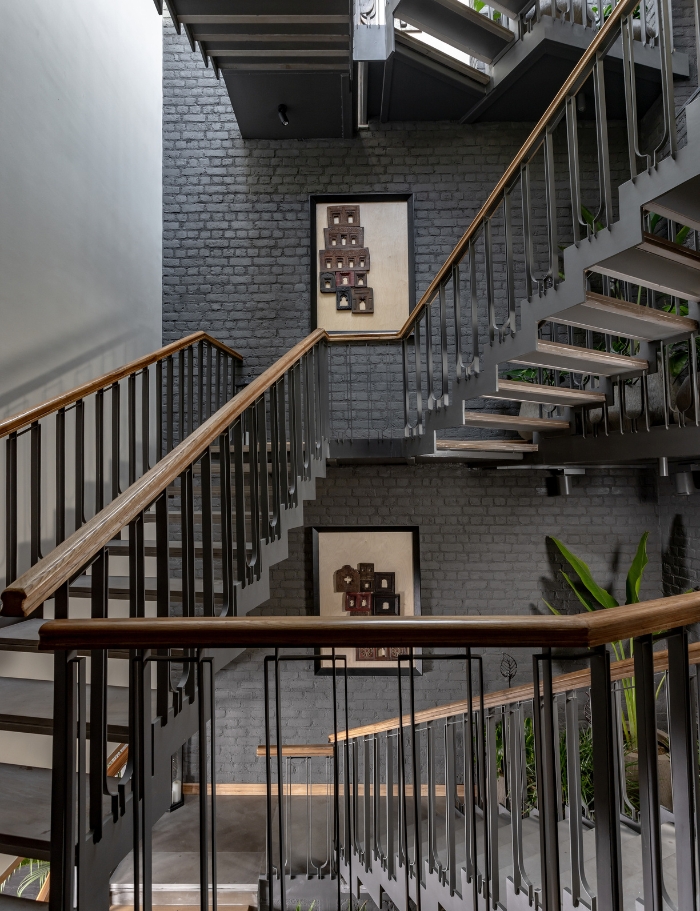
The design for House of Continuity in Gurugram illustrates how this balance can be achieved. The 20-year-old ground-plus-two residence was structurally sound, yet it had gradually fallen out of sync with the occupants’ evolving needs. Rather than altering the framework drastically, the existing structure was recalibrated around a newly introduced vertical core—a lightweight fabricated staircase crowned with a skylight that connects all levels of the home. This single intervention clarified circulation while fundamentally enhancing the spatial quality of the interiors.
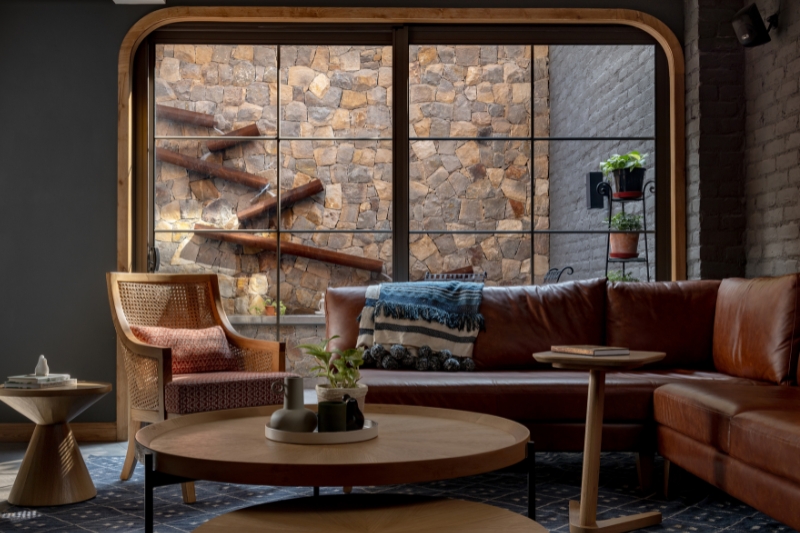
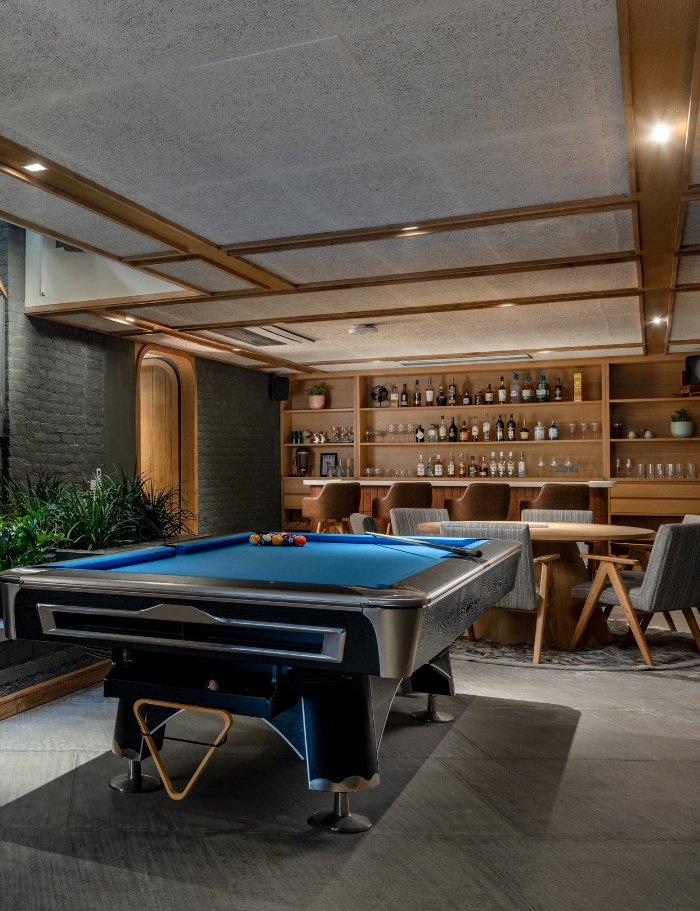
The basement was similarly reimagined through the introduction of a landscaped sunken courtyard. With fresh air and natural light now filtering into previously enclosed areas, the lower level was reintegrated into the daily life of the house, lending the entire home a renewed sense of openness and vitality. Simultaneously, services were upgraded—ageing plumbing and air-conditioning systems were replaced, structural columns strengthened, and solar panels introduced to enhance energy efficiency. The interiors reflect the same approach. Exposed brick walls remain unplastered, and the palette stays neutral and earthy. The design does not attempt to reinvent the house but refines it.
Restoration as a deliberate choice
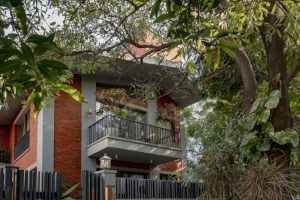
Restoration challenges the assumption that contemporary homes must begin from a blank slate. It demonstrates that spatial clarity, technological upgrades, and environmental performance can coexist within an existing architectural framework.
As cities expand and resources tighten, the ability to transform rather than replace will become increasingly important. Restoration presents a measured and pragmatic approach that values longevity as much as invention. Our approach to restoration is neither nostalgic nor prescriptive. Instead, it is restrained and attuned to context. It is a deliberate stance that prioritises efficiency, sustainability, continuity, and long-term relevance.