Our perception of the world is deeply rooted in our senses. Each sense interacts with one another, triggering and enabling others to create an experience. Have you ever noticed how a meal tastes even better when served on a meticulously arranged plate with soft music playing in the background? Or how do we feel more at ease in a space with natural light and a comfortable temperature?
We at groupDCA, believe that by thoughtfully considering and orchestrating sensory stimuli, we can influence how people feel, behave, and remember experiences. This impact extends to how individuals engage with their built environments. Engaging in sensory stimuli enhances emotional connection, deepens the user experience, heightens the sense of awareness, increases social interaction, and improves well-being.
But what is Sensory Design?
It is a holistic approach to crafting experiences that stimulate all our senses. It goes beyond the aesthetic of a space and combines how it feels, sounds, smells, and even tastes sometimes. This multi-sensory approach evokes specific moods and responses, creating a deeper connection between people and their environments. However, there can be many ways to combine sensory designs with spaces; we have listed a few that will help you think outside the box and make designs more dynamic.
In sight and in Mind!
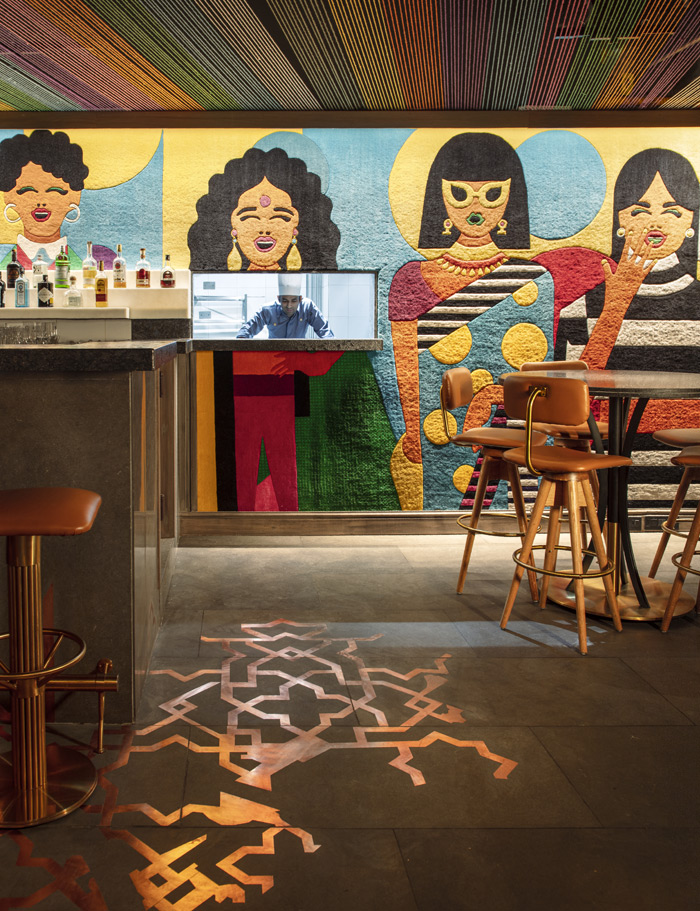
Visual aesthetics play a pivotal role in sensory design. From colour palettes, patterns, and lighting to spatial composition, we can leverage sight to evoke emotions and influence behaviours. For instance, one of our projects, Khi-Khi in New Delhi, uses vibrant colours to create a playful atmosphere for a restaurant bar. The colours in the threads that weave to form a ceiling, the lively rug used as a wall panel, and the furniture’s upholstery help the space embody laughter, or Khi-Khi, named after the Hindi word for giggling. Moreover, ambient lighting from lamps adds to the formal aesthetic of the culinary setting, elevating its sophistication.