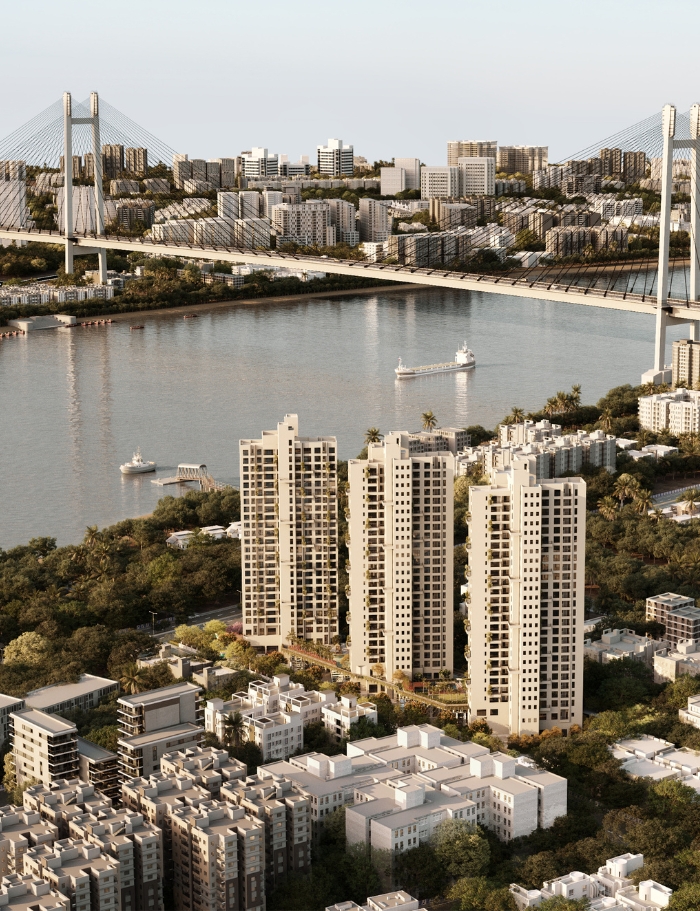
In rapidly urbanising Indian cities, residential architecture is often driven by efficiency, density, and visual impact. However, homes are not isolated objects. They are deeply shaped by the environments and social structures that surround them. Climate-responsive design and cultural context in architecture play a decisive role in determining how people inhabit space, how buildings age, and how comfortable they remain over time. Hence, design must return to the idea of contextual living and consider residences as responsive systems rather than static structures.
In a country as climatically and culturally diverse as India, this conversation has particular urgency. Rising temperatures, dense urban growth, and evolving family patterns are pushing residential design to reconsider long-standing assumptions. Instead of treating comfort as something achieved solely through mechanical systems, design must prioritise passive design strategies such as building orientation, cross-ventilation, and semi-open spaces. Similarly, cultural expectations about how families gather, celebrate, or maintain privacy also play an important role in shaping spatial planning.