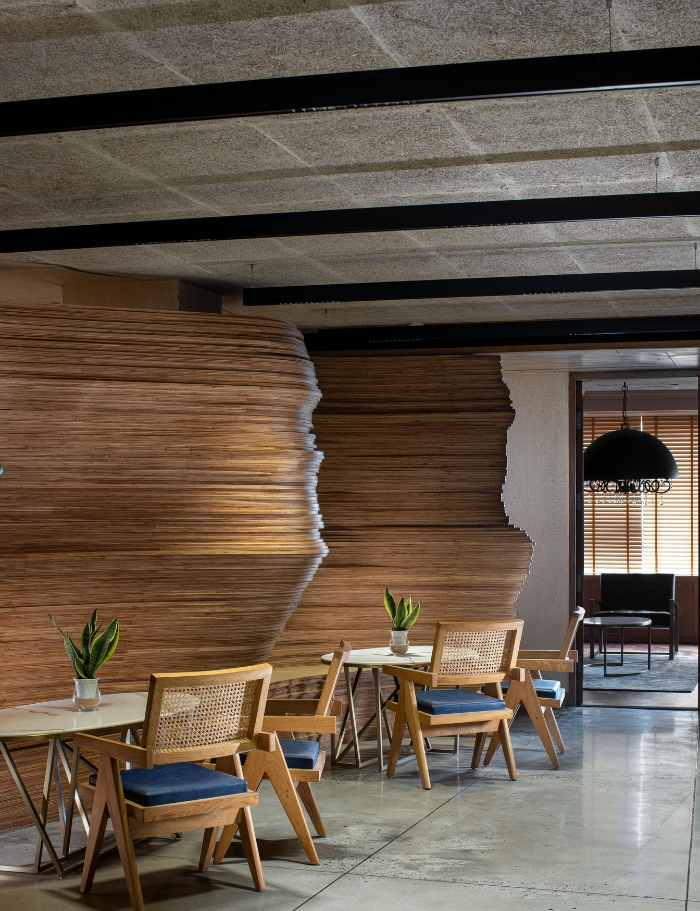
In many contemporary buildings, especially across commercial and hospitality typologies, the architectural shell often arrives as a neutral container—efficient, repeatable, and largely devoid of spatial character. It is within these frameworks that sculptural interior design becomes a critical design tool. Rather than treating interiors as a surface-level exercise, it allows design to engage with volume, structure, and sequence, transforming otherwise generic spaces into environments with identity and depth.
Beyond stylistic additions, sculptural interventions act as instruments through which function, emotion, and spatial clarity are negotiated together. Their relevance today lies in the increasing need for spaces that offer meaning and an enduring sense of place.