As Indian cities grow denser and homes contract into ever-smaller footprints, the balcony has come to hold unexpected importance. It is the rare fragment of openness in a verticalised landscape. At this threshold, a resident can lean into daylight, breathe unconditioned air, or look out onto the pulse of the street below. In compact apartments, it has become the most dynamic square metre, shifting roles throughout the day as a garden, workspace, dining corner, or simply a place of pause. In this adaptability, the balcony speaks of how urban homes continue to evolve, creating moments of relief and connection in the midst of constrained living.
This shift is changing how architects approach residential design. Balconies are no longer treated as narrow ledges tagged onto facades, whether in buildings or in independent houses, but as vital extensions of the home. They frame everyday rituals, such as morning tea, evening conversations, and provide the openness that compact living often denies. At groupDCA, we see the balcony as a stage that shapes the lived experience of the home as much as its interiors do.
In fact, the real estate market has sharpened this conversation. For many homebuyers, a balcony is not a decorative extra but a decisive factor in choosing an apartment. Developers highlight balconies in marketing because they add perceived—and real—value, offering a sense of openness that compact floorplans lack. A well-designed balcony can lift property desirability, acting as a differentiator in dense housing markets. In this way, the balcony sits at the intersection of architecture and aspiration, shaping both lifestyle and investment.
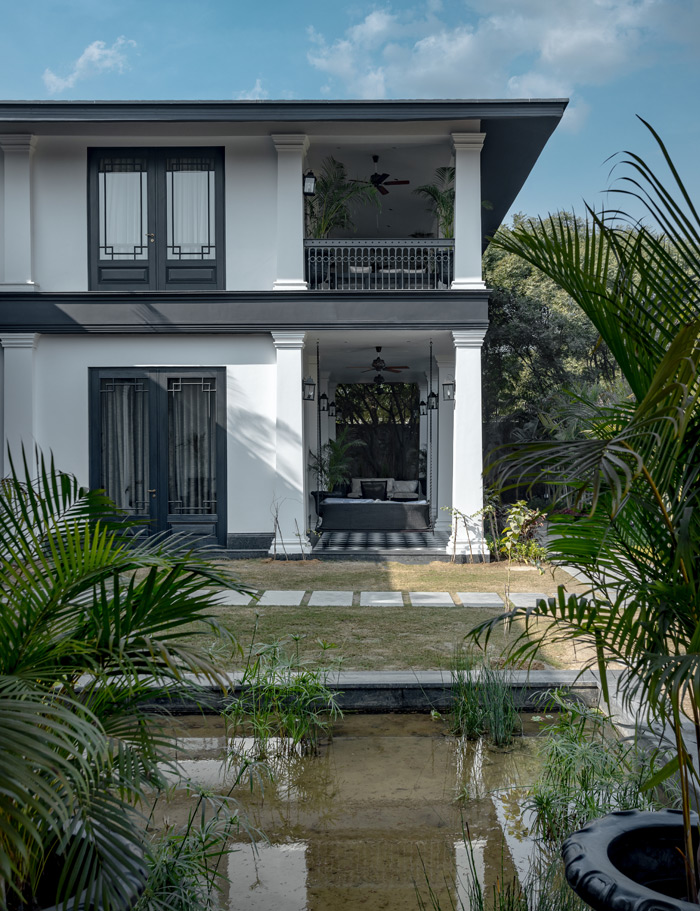
In the House of Verandahs, this idea takes form in layered balconies that reinterpret the traditional Indian verandah. Lined with greenery and carved deep into the building’s edge, these spaces act as transitional lounges, shaded, intimate, and yet connected to the outside. They mediate between home and outdoors, giving residents a porous threshold.