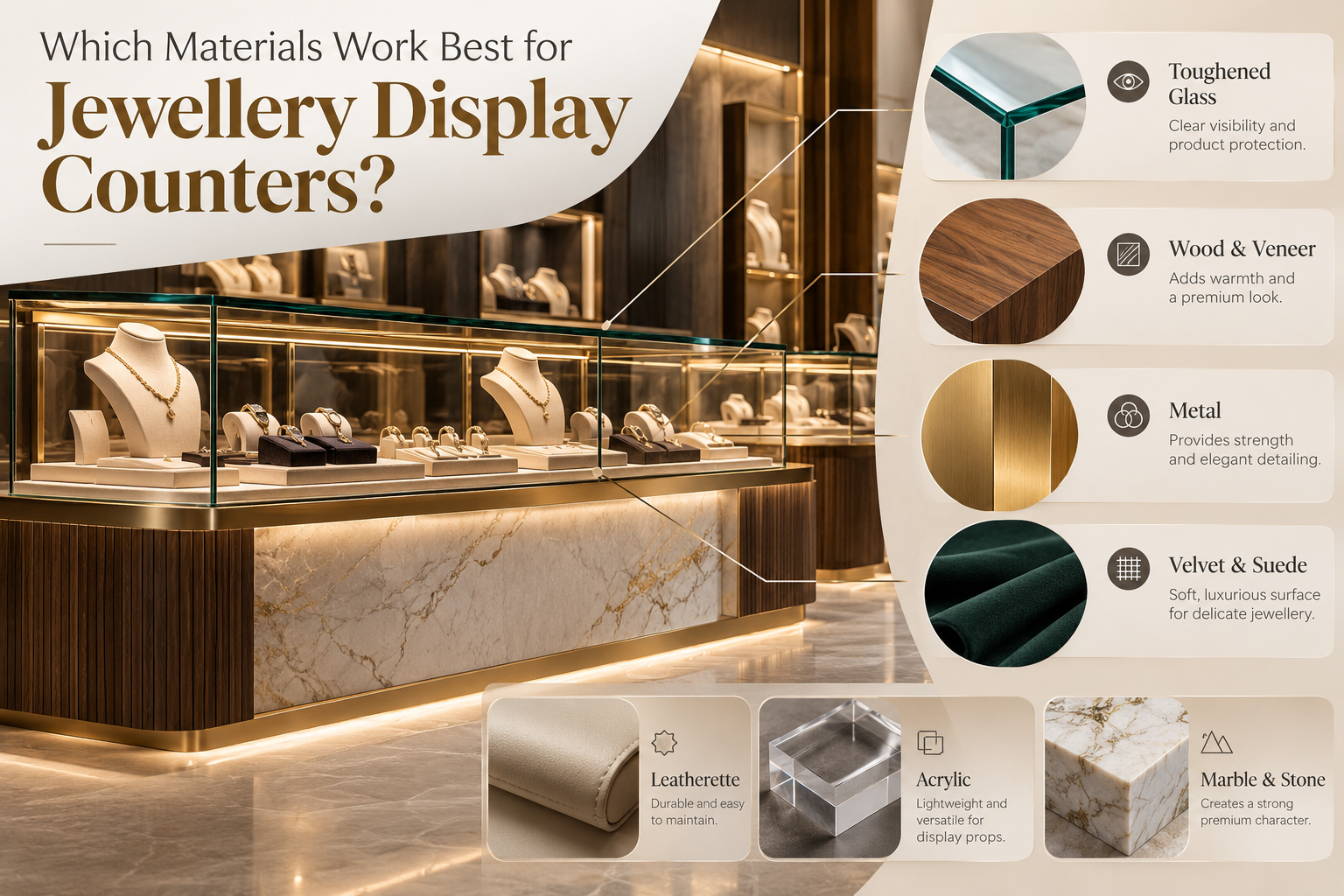
The best materials for jewellery display counters are usually a combination rather than one material. Toughened glass provides clear product visibility, wood or engineered boards can form the counter body, metal adds strength and detailing, while velvet, suede or leatherette create softer surfaces around the jewellery.
The right combination depends on what you sell, how often the counter is used, how the jewellery is handled and the character of the showroom.
For a premium jewellery store, the material should do three things well: protect the jewellery, help customers see it clearly and support the brand without competing with the product.
What Should You Consider Before Choosing Jewellery Display Counter Materials?
A material may look luxurious in a sample but still perform poorly in everyday retail use.
Before finalising a jewellery counter, consider:
- How clearly customers can see the jewellery
- How frequently staff open and use the counter
- Resistance to scratches and daily wear
- Ease of cleaning
- Lighting and reflections
- Jewellery type and colour
- Security requirements
- Overall showroom material palette
The jewellery should remain the main visual focus. Counter materials are there to support it.
Best Materials for Jewellery Display Counters at a Glance
| Material | Best Use | Main Advantage | Consideration |
|---|---|---|---|
| Toughened glass | Showcase top and sides | Clear visibility | Reflections need control |
| Low-iron glass | Premium display areas | Greater visual clarity | Higher specification |
| Wood/Veneer | Counter body and exterior | Warm, premium character | Needs suitable finish |
| Plywood/MDF | Counter structure | Flexible and practical | Should be properly finished |
| Stainless steel | Frames and structure | Durable and clean | Can feel cold if overused |
| Brass/Metal accents | Premium detailing | Adds refinement | Finish needs maintenance |
| Velvet/Suede | Trays and display surfaces | Soft and luxurious | Attracts dust |
| Leatherette | Trays and pads | Easy to maintain | Colour must suit jewellery |
| Acrylic | Risers and display props | Light and flexible | Scratches more easily |
| Marble/Stone | Counter façade or top | Strong premium character | Can add visual weight |
1. Toughened Glass for Clear Jewellery Display
Glass is one of the most important materials in a jewellery display counter because customers need to inspect small details without unnecessary visual obstruction.
Toughened glass is commonly preferred for retail showcases because it provides visibility while offering better safety characteristics than ordinary glass.
It works particularly well for:
- Horizontal display counters
- Vertical showcases
- Wall display units
- Island displays
- Enclosed jewellery cabinets
For premium counters, low-iron or suitable low-reflection glass can also be considered where clearer colour viewing and reduced visual distortion are important.
However, glass alone does not make a good counter.
Poorly positioned lighting can create reflections across the surface and make jewellery harder to see. Lighting, viewing angle and glass specification therefore need to be planned together.
When Does Low-Iron Glass Make Sense?
Standard glass can have a slight colour tint, especially around its edges.
Low-iron glass offers greater clarity and can be useful where accurate viewing of diamonds, white metals and gemstones is particularly important.
It may be worth considering for hero displays and premium showcases rather than automatically specifying it throughout the entire store.
2. Wood and Veneer for Warmth and Luxury
Wood brings warmth and visual depth to a jewellery showroom.
Walnut, oak and other refined veneers can work particularly well around display counters where the brand wants to communicate craftsmanship, heritage or understated luxury.
Wood is commonly used for:
counter bodies, drawer fronts, surrounding cabinetry, display bases and wall-integrated showcases.
The important factor is restraint.
A highly figured or strongly textured wood placed immediately behind small jewellery can compete with the product. Cleaner veneers and controlled finishes usually create a quieter backdrop.
Wood also needs an appropriate protective finish because display counters experience regular touching, cleaning and movement.
Where Wood Works Best
Wood is particularly suitable for heritage-led jewellery brands, private consultation areas and showrooms that want a warmer atmosphere.
For contemporary stores, a slim timber element can also be combined with glass and metal instead of making the entire counter visually heavy.
3. Plywood and MDF for the Counter Structure
The visible finish is only one part of a jewellery counter.
Many custom counters require an engineered structural core that can support drawers, storage, display equipment and decorative finishes.
Plywood and MDF can serve this purpose depending on the design and specification.
They can then be finished with:
- veneer
- laminate
- paint or lacquer
- decorative panels
- metal
- selected stone finishes
The customer does not necessarily need to see the structural material.
What matters is that the counter remains stable, the joinery is carefully detailed and the visible surface suits the showroom.
MDF or plywood should not automatically be treated as the final jewellery-contact surface. The areas where jewellery is placed usually need softer or more appropriate display finishes.
4. Metal for Structure and Fine Detailing
Metal can make jewellery display counters feel more precise and refined.
Stainless steel and aluminium can provide structural support, while brass-toned or other finished metal details can be used around glass frames, edges, handles and display units.
Metal works especially well in modern jewellery showrooms because relatively slim sections can create clear lines without visually overpowering the product.
Stainless Steel
Stainless steel is durable and relatively easy to maintain, making it useful for structural details and contemporary counters.
Aluminium
Aluminium is lightweight and can work well in slim framing systems.
Brass and Brass-Finish Details
Brass can introduce warmth and a more luxurious character.
Rather than covering an entire counter in a strong metallic finish, it is often more effective as a controlled accent around glass, handles or frame details.
The finish should also be selected with maintenance in mind because frequently touched metallic surfaces can show marks or changes in appearance.
5. Velvet, Suede and Microfiber for Jewellery Contact Surfaces
The material directly beneath jewellery deserves as much attention as the outer counter.
Velvet and suede-like surfaces are widely used because they create a soft backdrop and help protect delicate pieces from harder surfaces.
They also create useful colour contrast.
For example, light-coloured jewellery may read clearly against deeper backgrounds, while warm gold can work well against carefully selected neutral or contrasting tones.
The disadvantage is maintenance.
Velvet can attract lint and dust, so counters need regular cleaning. In a high-traffic showroom, removable trays or replaceable display inserts can make maintenance easier.
Where Soft Fabrics Work Best
Use them for:
ring trays, necklace pads, bracelet displays, presentation trays and private consultation counters.
The goal is not simply to make the display feel luxurious. The surface should also allow staff to place, remove and rearrange jewellery safely.
6. Leatherette for High-Use Display Areas
Leatherette offers a cleaner and more structured appearance than velvet and can be easier to wipe down during everyday showroom use.
This makes it useful for counters where displays change frequently.
Neutral shades such as cream, beige, grey and taupe can work across different jewellery categories.
Darker finishes can create stronger contrast, but the background should always be tested with the actual jewellery collection.
A display material that looks attractive on its own may not be the best background for the product.
7. Acrylic for Risers and Smaller Display Elements
Acrylic is useful when the jewellery needs support without a visually heavy frame.
Clear or frosted acrylic can be used for:
- Risers
- Ring holders
- Earring displays
- Information holders
- Smaller visual-merchandising elements
Because transparent acrylic has low visual weight, it can make a densely stocked display feel more open.
It is also easy to shape for custom display elements.
Its main limitation is scratching. Abrasive cleaning and frequent rough handling can quickly reduce the clarity of the surface.
For this reason, acrylic usually works better as a supporting display material than as the only material used throughout a premium jewellery counter.
8. Marble and Stone for Premium Counter Finishes
Stone and marble can add permanence and refinement to a jewellery showroom.
They are often better used on selected counter façades, bases or surrounding surfaces rather than directly beneath jewellery.
Stone has greater visual weight than glass or fabric.
In a compact store, too much marble can make counters feel bulky. In a larger flagship showroom, carefully selected stone can help establish scale and luxury.
The surface finish also matters.
Highly reflective finishes near jewellery displays can create unnecessary reflections, especially when strong lighting is involved.
A controlled stone finish generally works better than allowing every surface around the jewellery to compete for attention.
Which Material Combination Works Best?
There is no universal combination for every jewellery store.
1. For a Luxury Flagship Showroom
A strong combination can include:
glass + refined wood veneer + brass or metal detailing + stone + velvet or suede inserts
This creates richness while allowing each material to perform a specific role.
2. For a Modern Jewellery Boutique
Consider:
clear glass + slim metal frames + neutral leatherette + restrained wood or stone
The result can feel contemporary without making the display sterile.
3. For a High-Traffic Jewellery Store
Practicality becomes more important.
Consider materials that are easier to clean and maintain, such as:
toughened glass + durable finished cabinetry + stainless-steel details + removable leatherette or microfiber trays
4. For Private Jewellery Consultation Areas
Customers may spend longer examining and trying jewellery.
Wood, fabric-lined trays, comfortable seating and softer material transitions can create a calmer and more personal setting.
How Should Materials Change for Different Types of Jewellery?
The jewellery itself should influence the counter material.
Diamond Jewellery
Diamonds benefit from clean backgrounds and controlled lighting.
Avoid surfaces that introduce excessive visual pattern or glare.
Clear glass, restrained metal detailing and neutral or contrasting display pads can keep attention on brilliance and detailing.
Gold Jewellery
Yellow gold needs enough contrast from its surroundings.
Using too many similar warm metallic or yellow-toned surfaces can make the jewellery visually blend into the display.
Neutral creams, greys, selected deep colours and controlled timber finishes can provide better separation.
Gemstone Jewellery
Colour accuracy becomes particularly important.
The background should not visually compete with the stone or change how its colour is perceived.
Neutral display pads can be useful when customers need to closely evaluate the jewellery.
Bridal Jewellery
Bridal jewellery is often larger and viewed for longer periods.
Counters need adequate presentation space, comfortable consultation zones and display surfaces that allow several pieces to be compared without clutter.
How Do Counter Materials Affect Jewellery Store Layout Planning?
Material selection should happen alongside jewellery store layout planning, not after the floor plan has already been finalised.
A heavy stone counter, a transparent glass showcase and a private wooden consultation counter each affect the showroom differently.
The counter material can influence:
- Visual openness
- Circulation
- Display density
- Lighting positions
- Customer seating
- Staff access
- Storage
- Sightlines across the showroom
For example, transparent displays can maintain visual connection across a compact store, while large solid counters may create stronger spatial divisions.
This is why counters should be considered as part of the overall retail environment rather than as furniture placed into the showroom later.
What Should You Avoid When Choosing Jewellery Counter Materials?
Too Many Materials in One Counter
Luxury does not require every premium finish to appear together.
Glass, marble, dark wood, gold metal, velvet and decorative lighting used simultaneously can make a counter visually busy.
Choose a clear material hierarchy.
Highly Reflective Surfaces Around Jewellery
Strong reflections can compete with the jewellery and create glare under display lights.
Materials That Are Difficult to Maintain
A beautiful surface loses its value quickly if fingerprints, scratches, dust or stains remain visible throughout the day.
Choosing Colour Without Testing the Jewellery
Always view actual jewellery against the proposed surface.
A material sample alone does not show how gold, diamonds or gemstones will appear on it.
Treating Security as a Separate Issue
Visibility is important, but so are access control, locks, staff operation and storage.
These need to be considered while the counter is being designed.
What groupDCA‘s Jewellery Retail Projects Show About Material Selection
There is no single material formula for a successful jewellery showroom.
At Khanna Jewels in Gurugram, smoked walnut, marble, velvet-lined display elements, glass and metallic detailing create a rich but restrained environment. The materials support the jewellery rather than overwhelming it.
At Talwarsons in Chandigarh, glass-and-brass display units work with mahogany panelling and polished marble, creating a stronger flagship character.
At Anand Jewels, champagne-gold framed displays, marble counters and layered lighting help create clarity around the jewellery while supporting the wider customer journey.
These projects demonstrate an important principle: jewellery display counter materials work best when they are selected as part of a complete interior system involving product display, lighting, circulation, seating and brand identity.
FAQs About Jewellery Display Counter Materials
1. What is the best material for a jewellery display counter?
There is no single best material. A premium counter commonly combines clear glass for visibility, a stable structural body, metal or wood detailing and soft display surfaces such as velvet, suede or leatherette.
2. Is toughened glass good for jewellery counters?
Yes. Toughened glass is commonly used in jewellery showcases because it provides clear viewing and improved safety compared with ordinary untreated glass. The final specification should suit the size and construction of the display.
3. Is wood good for jewellery display counters?
Yes. Wood and veneer can add warmth and craftsmanship to jewellery interiors. Use the grain and colour carefully so they complement rather than compete with the jewellery.
4. Which fabric is best inside a jewellery counter?
Velvet, suede-like fabrics, microfiber and leatherette are common choices. Velvet provides a rich appearance, while leatherette and some synthetic materials can be easier to maintain in high-use areas.
5. Is acrylic better than glass for jewellery displays?
They serve different purposes. Glass is generally better suited to permanent enclosed showcases, while acrylic is useful for lightweight risers, stands and smaller display elements. Acrylic is lighter but can scratch more easily.
6. What colour is best for jewellery display counters?
The best colour depends on the jewellery. Neutral shades are versatile, while darker backgrounds can create contrast for certain metals and stones. Actual products should be tested against the proposed finish before final selection.
7. Should jewellery counters match the rest of the showroom?
They should belong to the same design language, but they do not have to repeat every material in the showroom. The counter should remain visually controlled so that the jewellery is still the focus.
8. Are marble jewellery counters practical?
Marble can work well as a premium external finish or counter surface when properly specified and maintained. It should be used carefully because too much stone can make a compact display feel visually heavy.
Final Thoughts
The best materials for jewellery display counters are the ones that balance visibility, durability, maintenance, product protection and brand character.
Glass may provide the viewing surface. Wood or engineered boards may form the body. Metal can add strength and detailing. Velvet, suede or leatherette can protect the jewellery, while stone or acrylic can be used selectively for specific visual and functional roles.
Instead of asking which one material is best, ask:
Which material should perform each job within the counter?
That approach creates jewellery displays that are easier to use, easier to maintain and more effective at keeping the jewellery itself at the centre of the showroom experience.