

Jewellery Showroom Interior Designers
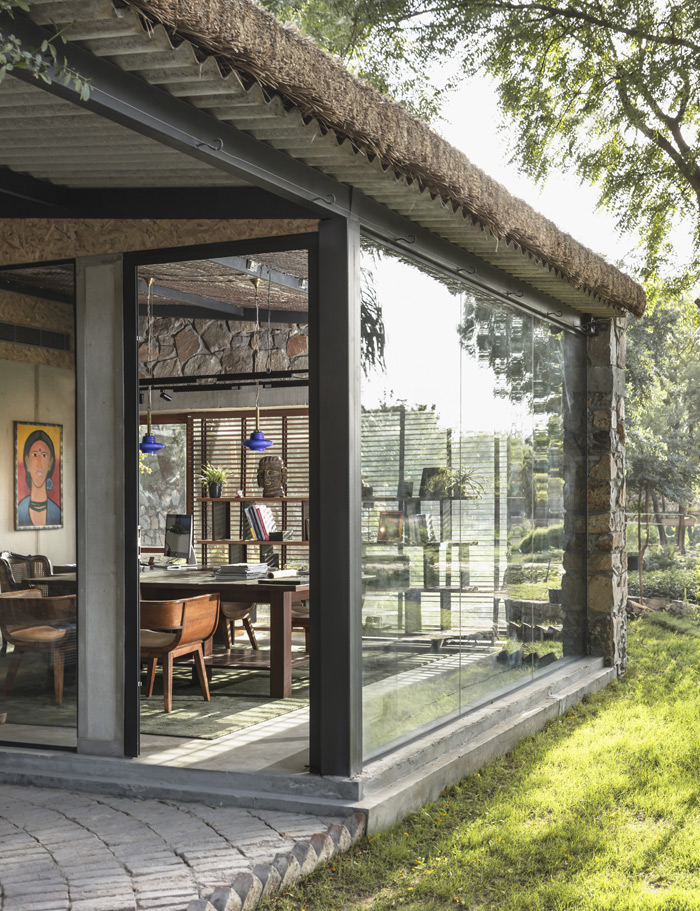
Luxury Jewellery Showroom Interior Designers In India
A successful luxury jewellery showroom interior designers should not begin with marble, chandeliers or decorative finishes. It should begin with the jewellery, the customer journey and the way the brand wants people to experience its collections.
The design should focus on the products, customer needs, and the brand’s style. From display counters and lighting to seating and security, every detail should make shopping easy, safe, and enjoyable. Group DCA is known for its professional luxury jewellery showroom design services in India, creating elegant spaces that reflect each brand’s identity and give customers a memorable shopping experience across India.
groupDCA looks at how customers enter the showroom, what they notice first, how they move between displays, where conversations happen and when a more private setting may be required.
The design then brings together jewellery display planning, customer circulation, consultation seating, product lighting, materials and brand identity within one spatial language.
For jewellery brands in Delhi, groupDCA approaches showroom interiors through a balance of display planning, material selection, lighting and customer experience. The aim is to create a refined retail environment that strengthens the brand while keeping the jewellery visually prominent.
For jewellery brands in India, this balance is important: the showroom needs to feel premium, but the interior should support the product rather than compete with it.
Our Premium Jewellery Showroom Interior Design Project's In Delhi And Surroundings
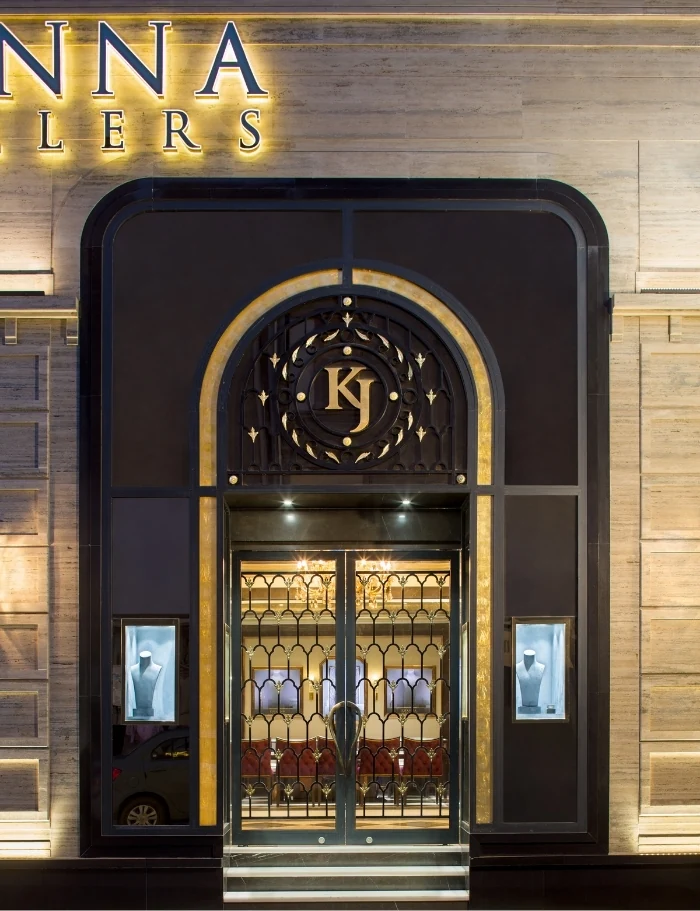
01. Khanna Jewels
Challenge: Create a premium jewellery boutique within a compact footprint without allowing rich finishes to overpower the products.
groupDCA used smoked walnut, marble, velvet-lined display niches and champagne-gold detailing in a restrained composition. Concealed services and focused lighting keep the ceiling visually clean while directing attention towards the jewellery and customer experience.
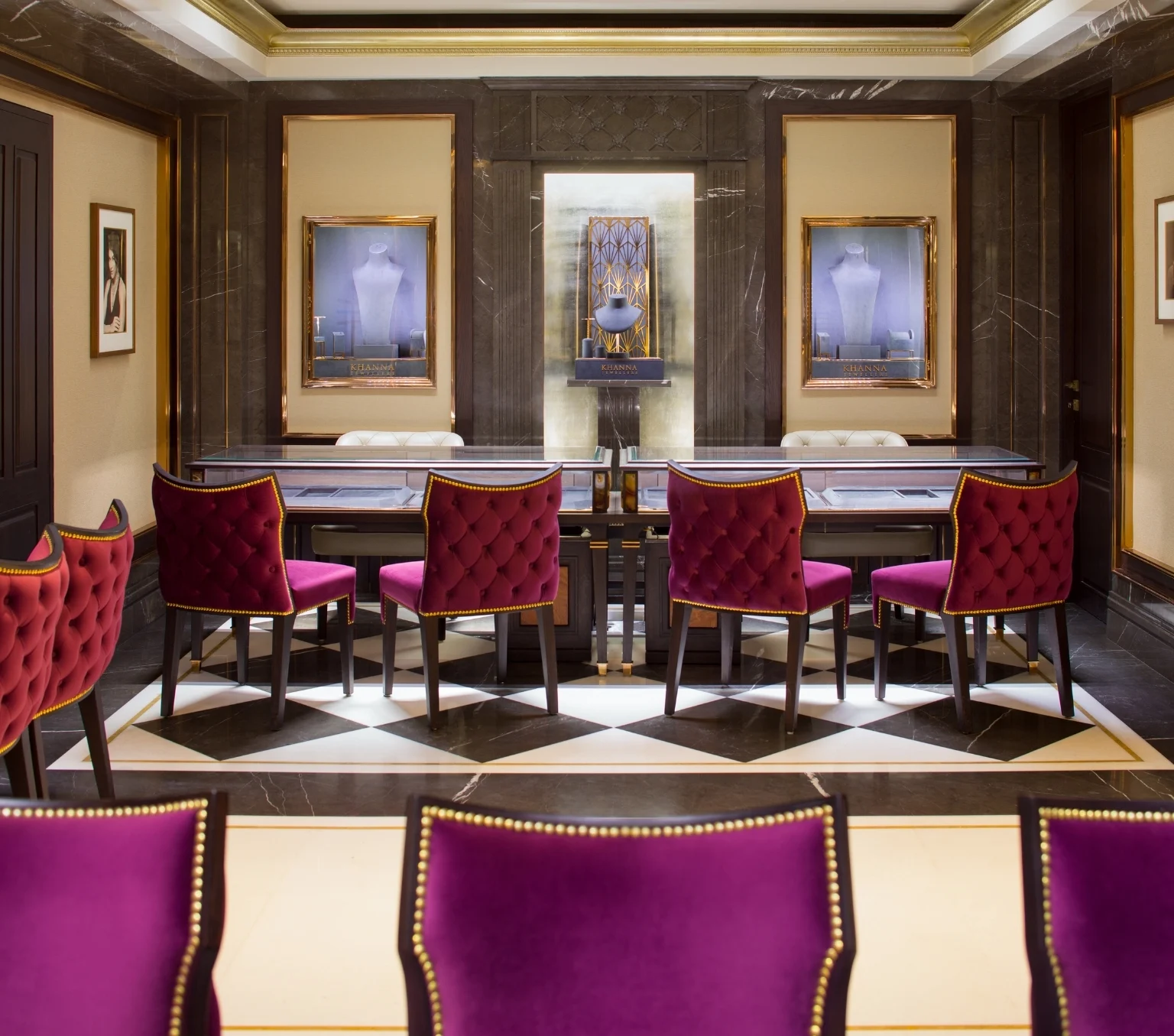
02. Khanna Jewels
Challenge: Translate an established jewellery brand's legacy into a showroom that felt formal, royal and contemporary.
The design uses strong symmetry, neoclassical arches, cornices, black metalwork and gold accents to establish order and prestige. Rather than adopting a playful layout, groupDCA used geometric precision and a composed façade to reinforce the character associated with high-end jewellery.
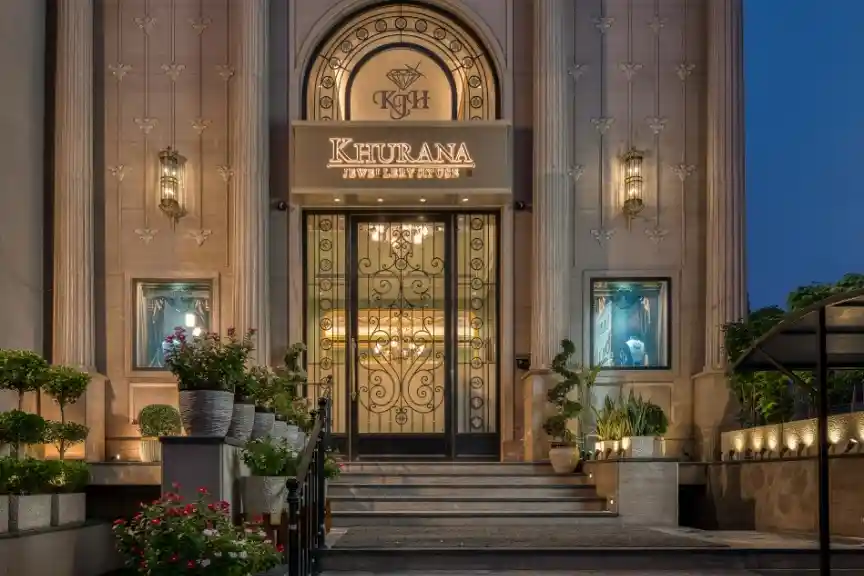
03. Khurana Jewels
Challenge: Create an opulent showroom without making jewellery shopping feel formal or hurried.
groupDCA organised the store as a sequence of gallery-like spaces. Long vitrines, upholstered chairs and a central seating island encourage customers to pause and browse, while marble, walnut-toned cabinetry, gold details and warm layered lighting establish richness without taking attention away from the jewellery.
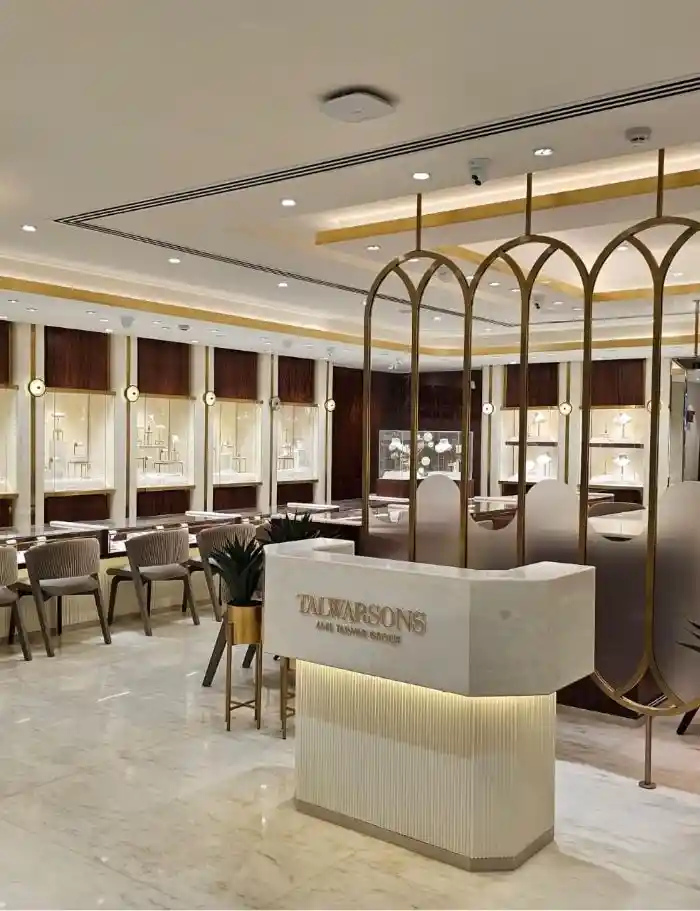
04. Talwarsons
Challenge: Connect a three-level jewellery flagship while giving each floor a sense of continuity and occasion.
An oval atrium became the spatial anchor, with a bespoke alabaster-and-brass chandelier extending through the triple-height volume. Mahogany, brass, marble and precisely framed displays create richness, while visual-merchandising moments guide customers through a vertically connected jewellery experience.
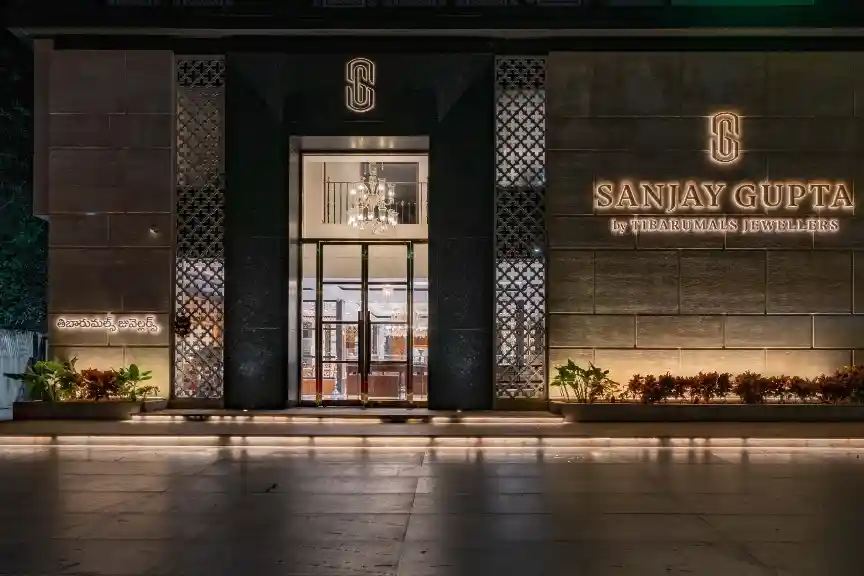
05. Tibarumal Jewellers
Challenge: Preserve the grandeur associated with a heritage jeweller while making the showroom comfortable for contemporary customers.
groupDCA balanced polished marble, timber, velvet and classical detailing with quieter consultation spaces. A restored heritage chandelier provides a strong focal point, while private rooms and bespoke cabinetry create more intimate settings for personalised jewellery selection.
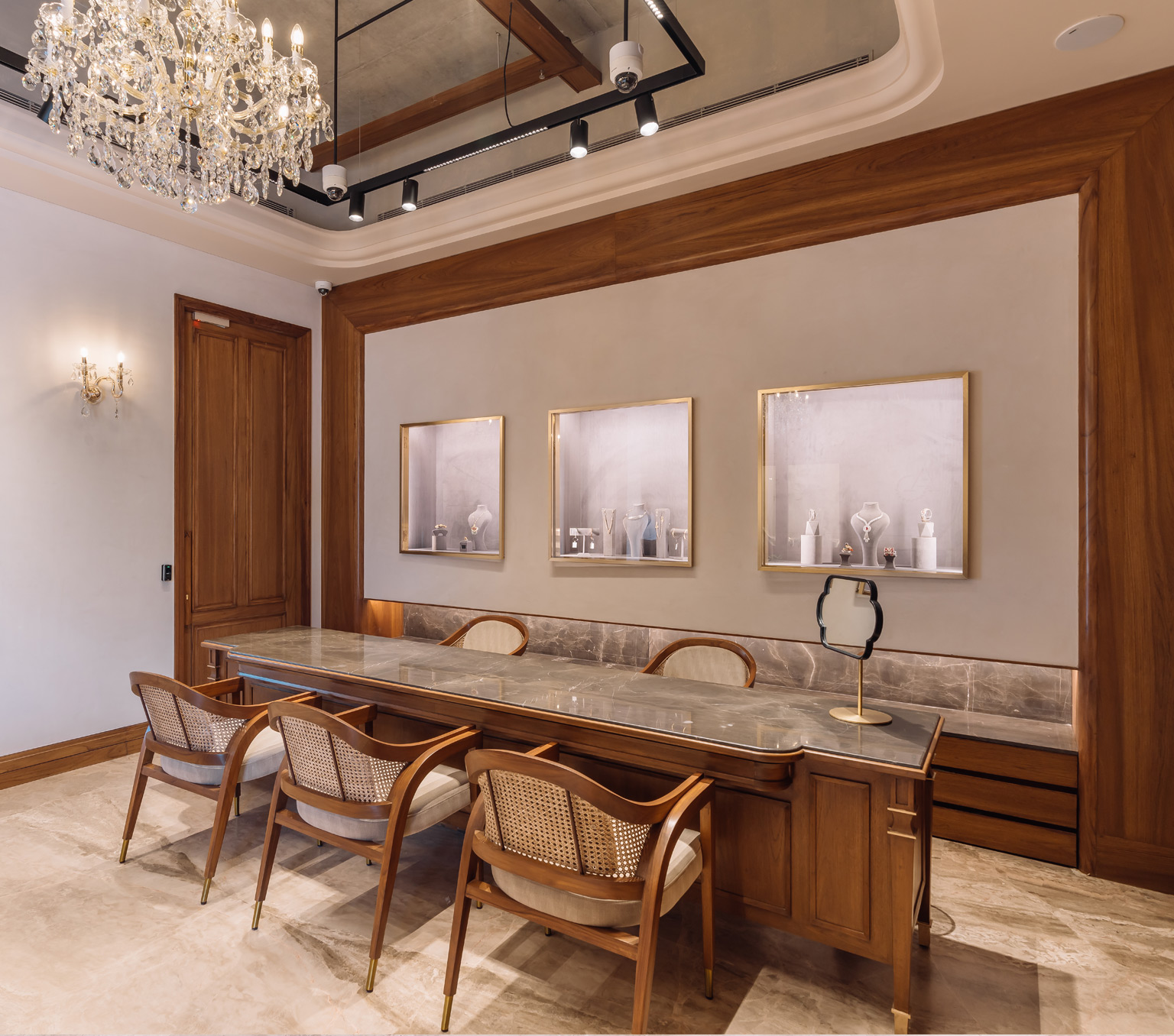
06. Abhishek Zaveri
Challenge: The earlier showroom felt compact and limited.
groupDCA created a more open customer journey with display areas, semi-private consultation spaces and a VIP lounge. Soft lighting, natural wood and muted stone keep the interior calm, premium and easy to move through.
Our Jewellery Showroom Interior Design Services
A successful jewellery store interior needs to resolve several requirements at the same time: the jewellery must be presented clearly, customers need comfortable spaces to browse and consult, staff require functional movement and access, and the brand needs an environment that feels recognisable and trustworthy.
groupDCA approaches luxury jewellery showroom interior design through coordinated spatial planning rather than treating displays, lighting, materials and furniture as unrelated layers.
Jewellery Store Layout & Space Planning
Planning customer movement, display areas, consultation zones, circulation and operational relationships around the available floor plate.
Learn MoreJewellery Display Design
Developing vitrines, display walls, counters and product presentation so jewellery remains visually prominent rather than competing with the interior.
Learn MoreCustomer Consultation & Seating Areas
Creating comfortable environments for browsing, detailed product viewing and longer conversations between customers and sales teams.
Learn MoreVIP & Private Consultation Spaces
Planning quieter, more private settings where the retail brief calls for focused or personalised customer interactions.
Learn MoreJewellery Lighting Design
Coordinating general, display and customer-facing illumination so products can be presented clearly while the wider showroom retains a comfortable atmosphere.
Learn MoreMaterial & Finish Strategy
Selecting stone, timber, metal, glass, fabrics and other finishes according to the brand identity, product character and intended level of visual richness.
Learn MoreBrand-Led Retail Interiors
Translating heritage, contemporary identity or luxury positioning into spatial character rather than relying only on logos and decorative branding.
Learn MoreWhy groupDCA for Jewellery Showroom Interior Designing?
Experience in Jewellery Retail Design
groupDCA has experience in jewellery showroom interior design in Gurgaon and across multiple Indian cities, with projects including Khanna Jewels, Khurana Jewels, Talwarsons, Tibarumal Jewellers, Abhishek Zaveri, Anand Jewels and Mirwah. This portfolio spans boutiques, flagship stores, gallery-like showrooms and multi-level retail environments.
Product-First Display Thinking
Jewellery is physically small but visually important. The surrounding interior needs enough character to build a premium experience without distracting from the product. groupDCA's jewellery projects demonstrate the use of controlled materials, lighting and display framing to maintain this hierarchy.
Customer Journey Before Decoration
A jewellery showroom is experienced as a sequence: arrival → browse → view → consult → decide. groupDCA considers circulation, seating, displays, visual pauses and private zones as part of this journey rather than treating the store as a collection of counters.
Luxury With Restraint
Premium retail does not require every surface to compete for attention. Projects such as Khanna Jewels and Abhishek Zaveri demonstrate how restrained palettes, crafted details and carefully placed visual emphasis can create luxury while allowing the jewellery and customer experience to remain central.
Material & Lighting Sensitivity
Stone, timber, velvet, metal, glass and lighting behave differently around fine jewellery. groupDCA considers materials and illumination together so finishes support product display, atmosphere and brand character instead of becoming independent decorative statements.
Bespoke Design for Each Brand
A heritage jeweller, contemporary designer boutique and large flagship store do not require the same interior. groupDCA develops each jewellery retail interior design response around the brand's identity, site, merchandise, target customer and operational brief.
Our Jewellery Showroom Interior Design Process
STEP 01 | Dream
The process begins by understanding the jewellery brand, its customers, collections and ambitions for the store. groupDCA studies the site and discusses how customers should arrive, browse, interact with products and experience the brand. The objective is to define what the showroom needs to communicate before deciding how it should look.
STEP 02 | Define
The team considers the jewellery store layout, circulation, display hierarchy, consultation areas, customer seating, visual focus, lighting requirements, material direction and operational relationships. This stage establishes the structure of the customer journey and the overall design language.
STEP 03 | Develop
The selected direction is refined through detailed spatial and material studies. Display units, counters, cabinetry, furniture, lighting, surfaces and architectural details are coordinated so they work as one environment. The aim is to ensure that the jewellery, brand identity and customer experience remain connected throughout the showroom.
STEP 04 | Deliver
The developed design moves toward detailed documentation, coordination and implementation according to the agreed project scope. Attention remains on the relationship between the original concept, material execution, display detailing, lighting, circulation and functionality so that the completed jewellery showroom interior retains the intended spatial and brand character.
Trusted by those who live the craft.
FAQs
Stay Connected
Subscribe to our newsletter for exclusive insights, project updates, and design trends.