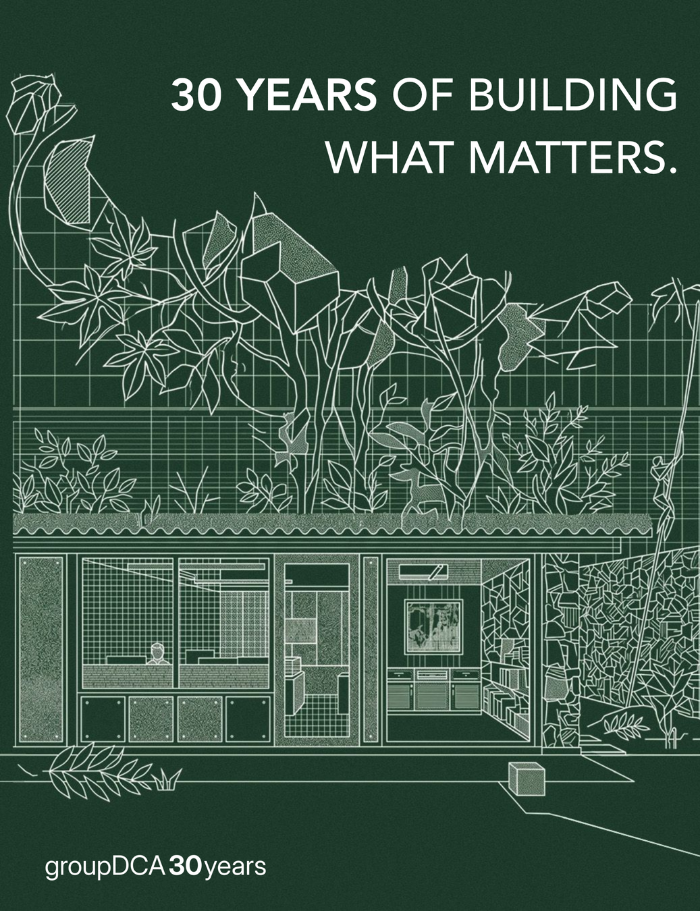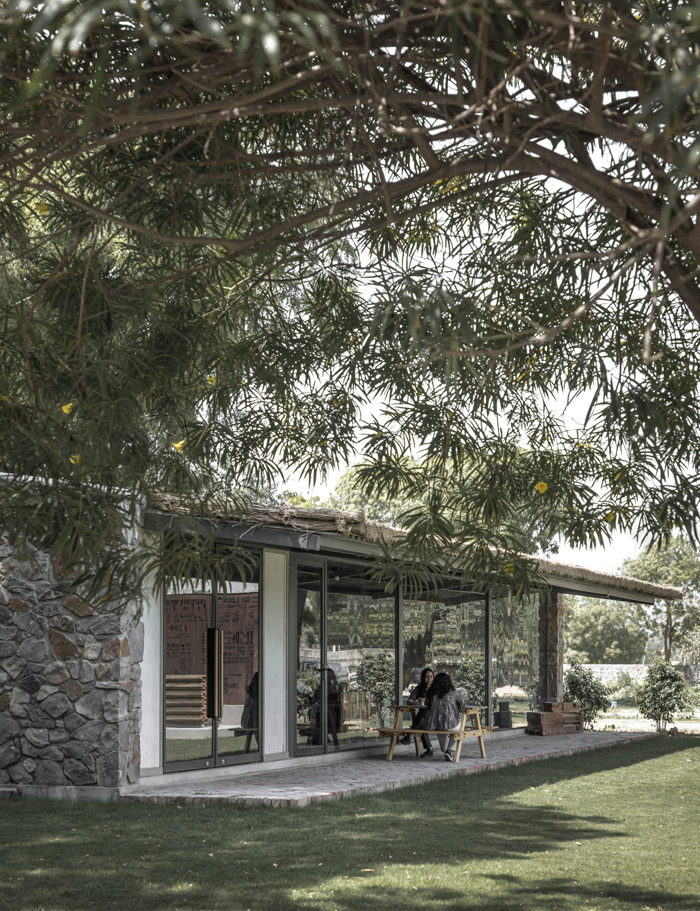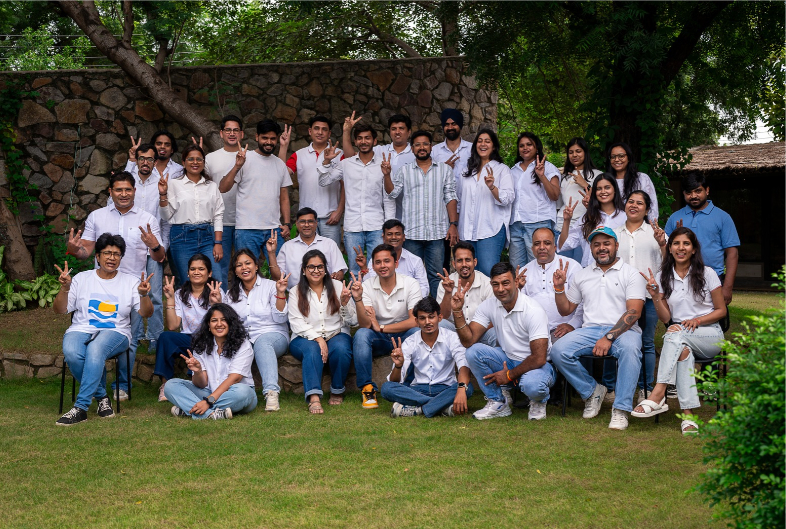
Architecture is often romanticised as a single person’s vision. Yet, every enduring space is born from the joint effort of multidisciplinary teams, visionary clients, and master craftspeople—who together translate abstract ideas into built reality. Over three decades, Amit Aurora and Rahul Bansal have shaped groupDCA into a collaborative design practice. What began as a commitment to simplicity, longevity, and material honesty in interiors has expanded into a studio philosophy, where collaboration turns these convictions into practical reality. Today, the principle remains simple: the strongest idea should move the project forward, regardless of where it originates.
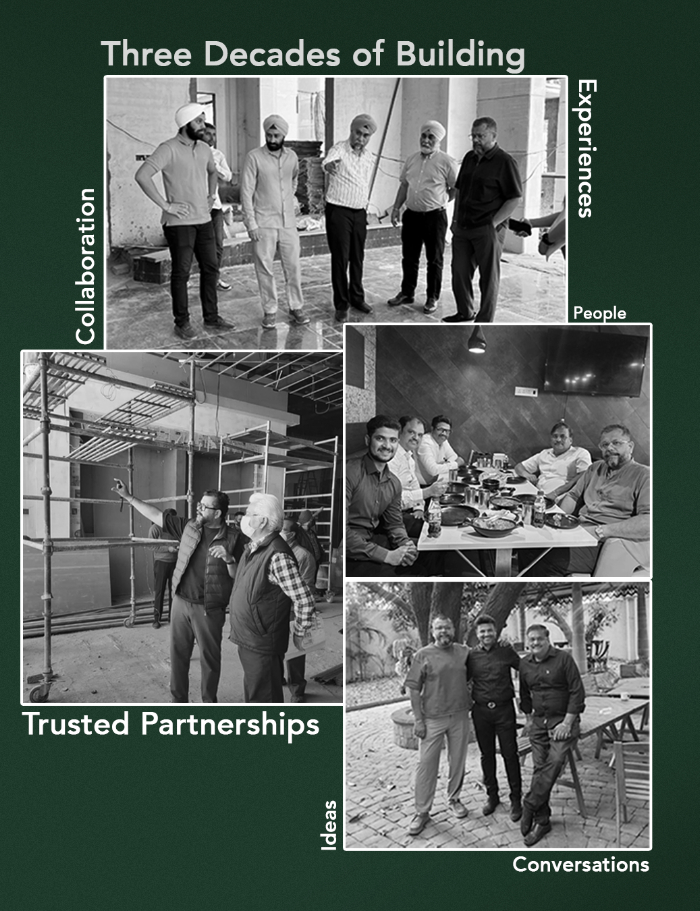
The Makers: Unseen Hands Behind Precision
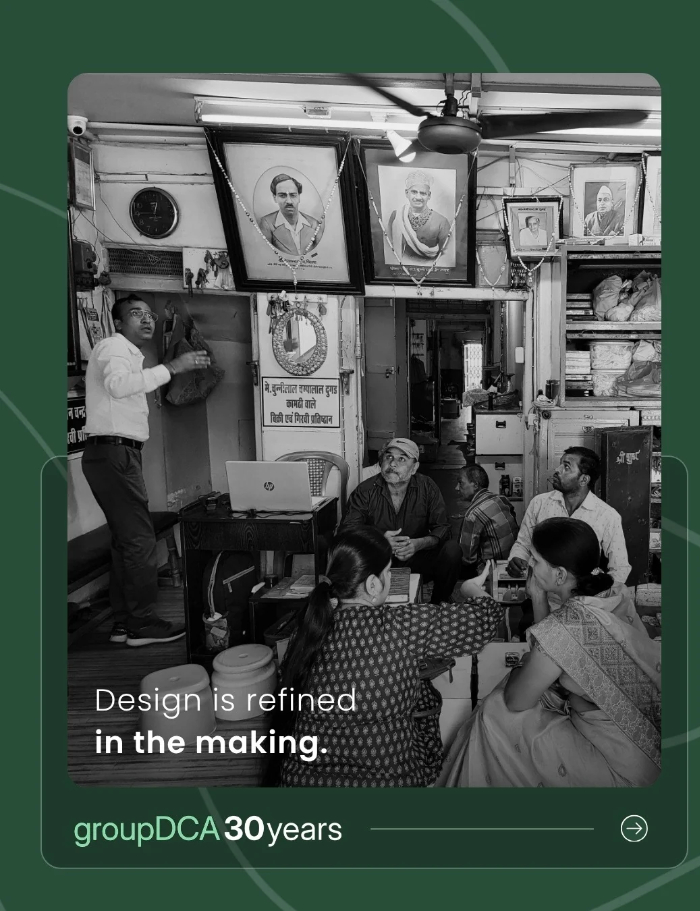
The work of groupDCA extends far beyond surface decoration—they focus on stepping away from the studio to honour the artisan craftsmanship that can translate paper sketches into soulful spaces. The studio’s design philosophy is simple and detail-oriented, functional rather than ornamental. Across diverse typologies, from urban residences to adaptive reuse structures—master artisans understand how unpolished sandstone breathes, how hand-cast terrazzo settles, or how reclaimed teak door frames hold structural weight over decades, elevating the traditional craftsmanship of Indian architecture.
This material mastery is precisely what drives longevity. Built on mutual trust between architect and craftsman, these intricate site details ensure spaces endure for generations. Rather than treating artisans as mere executants, groupDCA integrates their hands-on insights directly into the early design process—proving that the intersection of contemporary design and traditional craft yields the most optimal spatial solutions.
The Collaborative Triad: Client, Architect, and Artisan
At groupDCA, the creative journey is not linear; instead, it creates an equilibrium between the client, architect, and artisan. The traditional hierarchy—where the architect narrates, the mason executes, and the client passively observes—is intentionally dismantled. Whether tailoring bespoke private homes, agile workplace environments, or experience-driven retail flagships, the client provides the purpose and personal nuance rooted in their daily life or operational goals. The architect interprets and translates these needs into spatial character, climate responsiveness, and structural longevity. Artisans define the clean carving of stone, an intuitive understanding of raw materials, and the ability to transform a vague abstract into something impactful.
Together, this cross-disciplinary design process allows Indian architects to look beyond conventional approaches while supporting local stonemasons and fabricators.
The Collective Intelligence Legacy
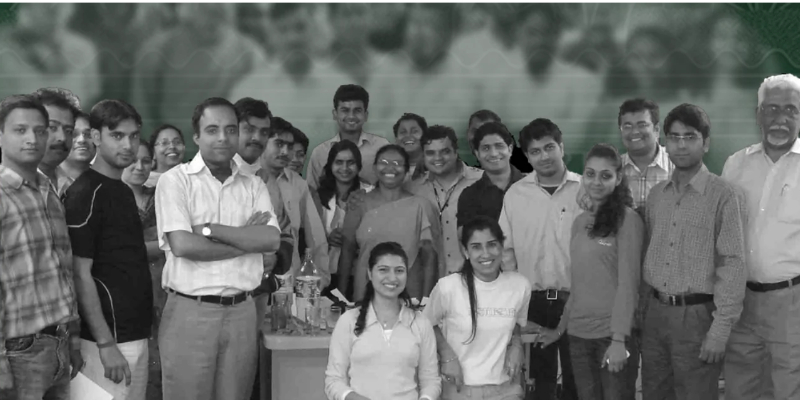
A practice’s true signature never belongs to a single author; it is the shared insights of the entire team. Over thirty years, as a multidisciplinary design studio in NCR, groupDCA has cultivated a holistic studio culture.
When a contextual design moves through the studio, every team member stress-tests it from their own domain of expertise. A junior architect might refine the human-scale layout, while a project lead evaluates structural efficiency, climate responsiveness, and local material behaviour. The team continuously questions and refines the draft until only the most essential design elements remain. Over time, these exchanges become part of the practice’s institutional memory—allowing each new project to benefit from the lessons of those that came before. An enduring architectural legacy is shaped by collective vision and collaboration. It is forged through a collective intelligence—a shared body of knowledge that sharpens and elevates every project long before a single stone is laid on site.
Designing the Next 30 Together
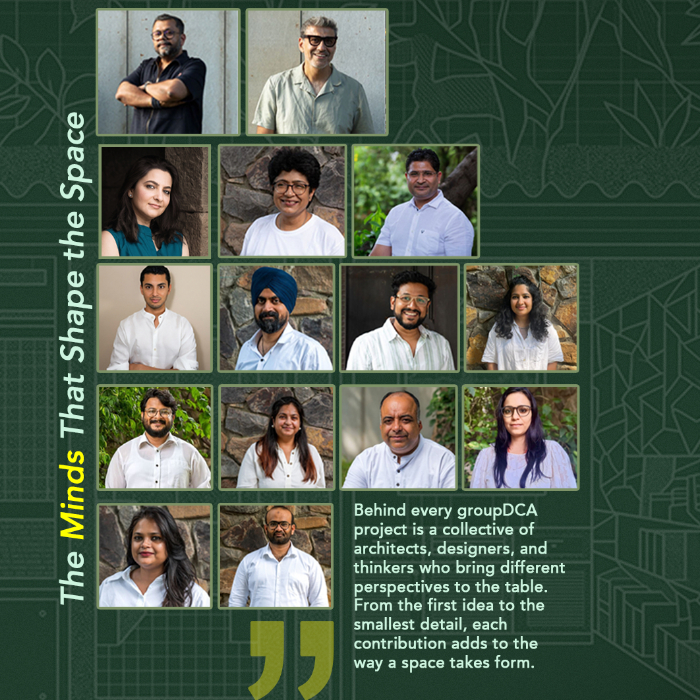
A thirty-year legacy is not built on drawing alone; it is built on client-architect co-creation, team dynamics, and lasting partnerships.
With an ongoing shift in India’s architectural landscape, computational tools are embraced while ensuring local building wisdom, passive climate strategies, and regional materials remain core to our output. This includes sustaining multi-decade relationships with residential, commercial, retail, and corporate partners, working together to build environments rooted in human empathy, operational function, and spatial clarity. Simultaneously, we remain dedicated to investing in young design talent and supporting the craft communities whose hands sustain India’s material heritage.
Buildings are never static outcomes; they are ongoing conversations. To the clients who entrust us with their visions, the multidisciplinary studio teams who challenge every detail, and the master craftspeople who build on site: thank you for shaping the past thirty years. Together, we build what matters for the next thirty.